

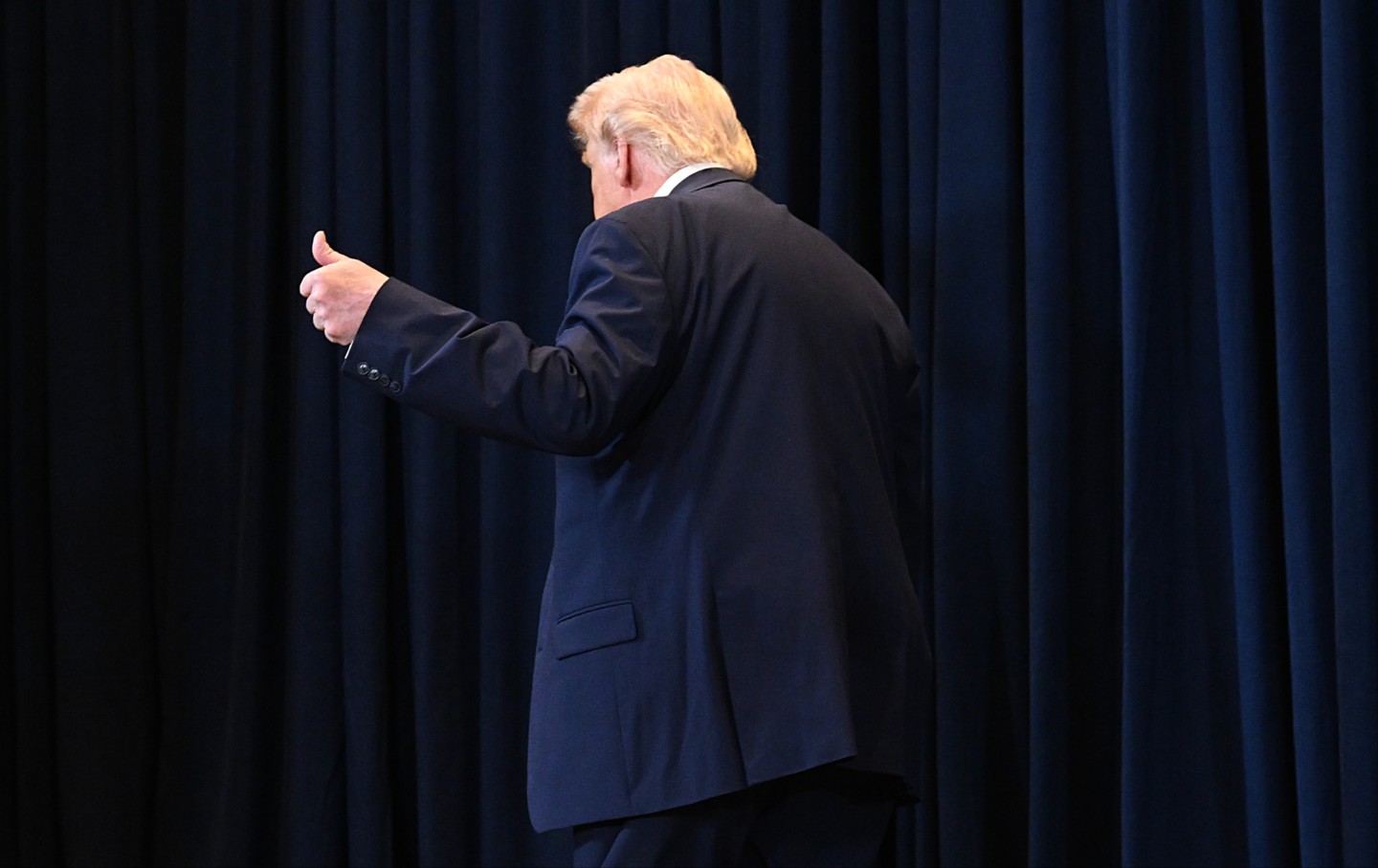
Trump’s reckless and unnecessary conflict is hurting allies as well as foes.
Donald Trump leaves after speaking to reporters during a news conference at Trump National Doral Miami on March 9, 2026, in Doral, Florida.
(Roberto Schmidt / Getty Images)
In 1968, Henry Kissinger, then on the cusp of his tenure as the most powerful foreign policy figure in the Nixon and Ford administrations, quipped that “it may be dangerous to be America’s enemy, but to be America’s friend is fatal.” Kissinger’s remarks were much quoted on social media this week as the new war launched by Donald Trump against Iran once again demonstrated that US imperialism has a way of devastating allies as well as foes. The brunt of suffering caused by the war is not restricted to the main actors—the United States, Israel and Iran—but extends across the region and indeed the world. Thousands have been killed and injured, mainly in Iran and Lebanon (now suffering an Israeli invasion), but also in Israel, Saudi Arabia, Bahrain, and the United Arab Emirates, all of which are suffering for their fealty to the US.
Beyond the regional human cost, the war is also upending the global economy by sending oil and gas prices spiralling. On Thursday, The New York Times reported that the war has been “a stunning punch to a worldwide economy that has already been walloped by a breakdown of the international trading order, war in Ukraine and President Trump’s chaotic policymaking.” As a result of the war, the world could likely see higher inflation, higher interest rates, and possibly even a rise in hunger, since fertilizer costs are surging.
Culpability for this disaster lies squarely with the Trump and Netanyahu governments, which launched a war of choice against an enemy that presented no imminent threat. Even after nearly two weeks of conflict, Trump has still failed to offer any convincing justification or even a plausible goal for his attack. And the rest of his administration appears to have been just as reckless; on Thursday, CNN reported that the US didn’t even have a plan for what was always one of the most likely outcomes of a war:
The Pentagon and National Security Council significantly underestimated Iran’s willingness to close the Strait of Hormuz in response to US military strikes while planning the ongoing operation….
President Donald Trump’s national security team failed to fully account for the potential consequences of what some officials have described as a worst-case scenario now facing the administration.
This is a breathtaking lack of foresight, given the fact that the vulnerability of the Strait of Hormuz has haunted military planners for decades.
Current Issue

Other regional governments, particularly the Gulf monarchies, didn’t ask for this war, but they are paying an immense price. They are well justified in seeing themselves as collateral damage for the imperial games the US and Israel are playing. Writing in the Israeli newspaper Haaretz, Hussein Ibish, a resident scholar at the Arab Gulf States Institute, notes that US allies in the Middle East are angry not just at Iran but also the US and Israel. According to Ibish:
there is also a palpable degree of dismay with Washington, which launched the war in conjunction with Israel despite their warnings, and is proceeding with a crazy-quilt laundry list of incoherent and often self-contradictory goals that do not seem to take their interests into account.
It could well prove an inflection point with relations with the United States, particularly as energy and crucial life-sustaining infrastructure is attacked by Iran.
On Wednesday, Badr Albusaidi, the foreign minister of Oman, displayed notable antipathy toward US war aims, saying Washington wanted not just “to weaken Iran” but to “reshape the region…prevent the creation of a Palestinian state and weaken those who support that project.” He added that Oman would now reject the normalization of diplomatic relations with Israel and refuse to join the so-called Board of Peace created to oversee Gaza.
Albusaidi’s comments are a sign of what is likely to be one of the most long lasting legacies of the war: the growing disillusionment of formerly stalwart friends of the United States. Because of America’s superpower status and the strength of status quo bias, these ties won’t fray overnight. But given the disaster Trump has unleashed on the world, many allies will naturally be asking whether the cost of friendship with the US is worth the price.
The problem of American unreliability was already seen as an existential threat before the current war, given Trump’s professed desire to annex Canada, Greenland, and other territories. But Iran makes the issue even more acute, since the US is not just threatening neighbors but also rapidly using up munitions that allies might need in a crisis.
On Saturday, Politico reported,
American allies are watching in disbelief as the Pentagon reroutes weapon shipments to aid the Iran war, angry and scared that arms the U.S. demanded they buy will never reach them.
European nations that have struggled to rebuild arsenals after sending weapons to Ukraine fear they won’t be able to ward off a Russian attack. Asian allies, startled by America’s rate of fire, question whether it could embolden China and North Korea. And even in the Middle East, countries aren’t clear if they will get air defenses from the U.S. for future priorities.
Currently, US allies are caught between a rock and a hard place. The country they rely on so deeply for military protection is now a major threat to their security. As a rogue superpower, the US has proven to be erratic and untrustworthy, launching imperial adventures that threaten global stability.
In the short term, countries such as Canada and Germany have adopted a strategy of passive-aggressive grumbling. They alternate between complaining about the US and trying to humor it. But in the long term, this tightrope walk won’t work: US allies will either have to accept their fate as vassals to an unstable empire or, more productively, move toward independence.
Only by breaking free of dependence on US arms will countries in Europe, the Middle East, Asia, and the Americas be able to constrain the rogue empire. Given the structure of long-standing alliances, this move to independence will be slow and difficult. But it’s the only path forward for a more peaceful world.
Even before February 28, the reasons for Donald Trump’s imploding approval rating were abundantly clear: untrammeled corruption and personal enrichment to the tune of billions of dollars during an affordability crisis, a foreign policy guided only by his own derelict sense of morality, and the deployment of a murderous campaign of occupation, detention, and deportation on American streets.
Now an undeclared, unauthorized, unpopular, and unconstitutional war of aggression against Iran has spread like wildfire through the region and into Europe. A new “forever war”—with an ever-increasing likelihood of American troops on the ground—may very well be upon us.
As we’ve seen over and over, this administration uses lies, misdirection, and attempts to flood the zone to justify its abuses of power at home and abroad. Just as Trump, Marco Rubio, and Pete Hegseth offer erratic and contradictory rationales for the attacks on Iran, the administration is also spreading the lie that the upcoming midterm elections are under threat from noncitizens on voter rolls. When these lies go unchecked, they become the basis for further authoritarian encroachment and war.
In these dark times, independent journalism is uniquely able to uncover the falsehoods that threaten our republic—and civilians around the world—and shine a bright light on the truth.
The Nation’s experienced team of writers, editors, and fact-checkers understands the scale of what we’re up against and the urgency with which we have to act. That’s why we’re publishing critical reporting and analysis of the war on Iran, ICE violence at home, new forms of voter suppression emerging in the courts, and much more.
But this journalism is possible only with your support.
This March, The Nation needs to raise $50,000 to ensure that we have the resources for reporting and analysis that sets the record straight and empowers people of conscience to organize. Will you donate today?
More from The Nation

Nepal’s “Gen Z revolution” achieved historic and unexpected electoral success—but transformational change remains elusive.
Years after leading opposition to the US war in Iraq, France’s Dominique de Villepin speaks out against another illegal war in the Middle East and Europe’s timid response.
As Haiti confronts deepening violence and political collapse, calls for military intervention risk repeating a long history of foreign policies that have destabilized the country….
As Israel bombards Iran with rockets, it is sealing off borders across Gaza and the West Bank, halting the flow of food, aid, and bodies.
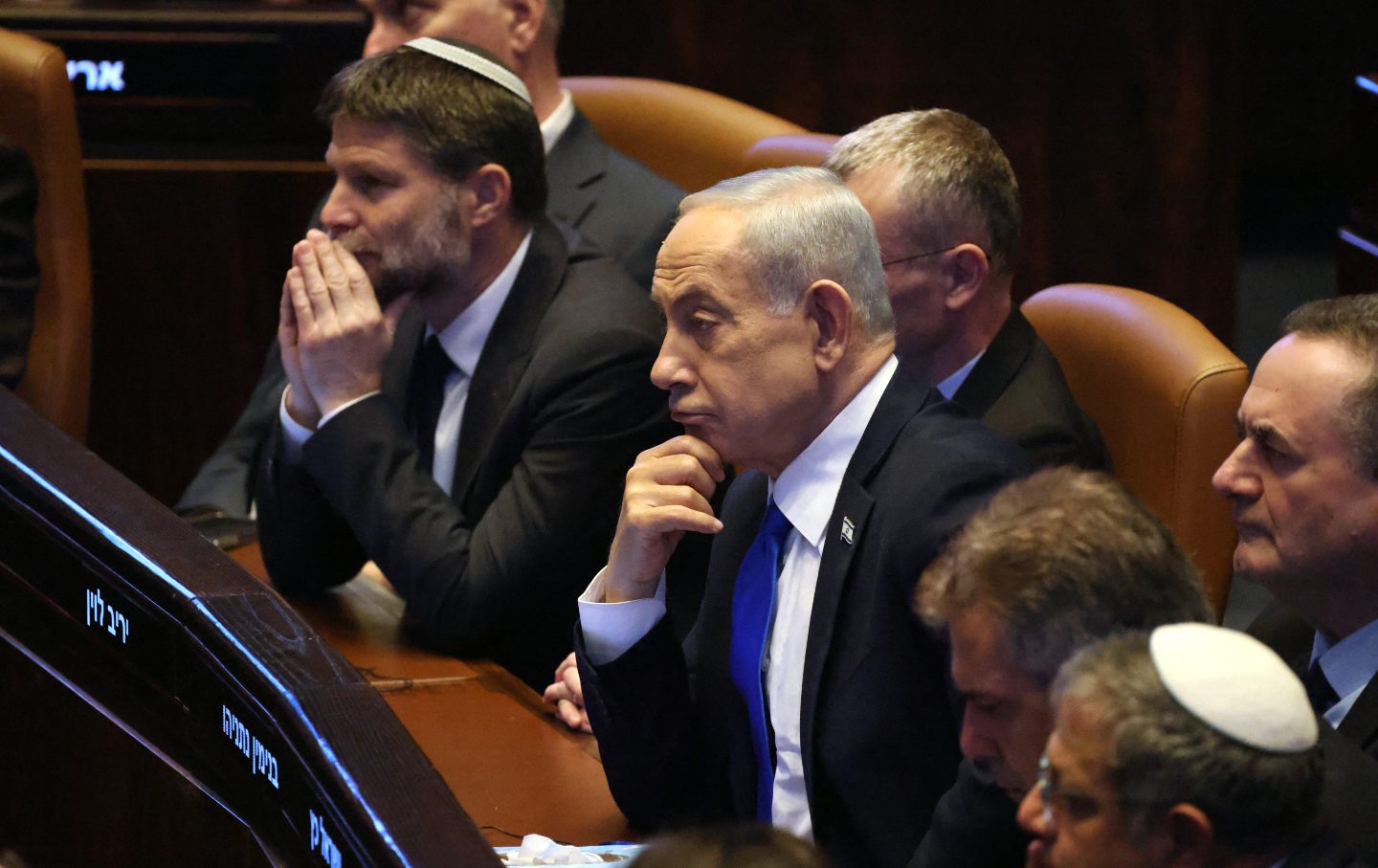
The US attack on Iran may be less about American security than about the priorities of Israel’s government.
