


By Adrian H. Halili, Reporter
A POTENTIAL joint oil exploration between the Philippines and China might be revived, Manila’s top diplomat said on Wednesday, as the conflict involving Iran threatens global oil supplies and prompts the Southeast Asian nation to widen its energy options.
Foreign Affairs Secretary Maria Theresa P. Lazaro said discussions with Beijing have not yet begun, but could follow as the government reassesses supply risks stemming from the Middle East.
“Not at this point in time, but I think it may be forthcoming,” she told reporters when asked whether talks have started.
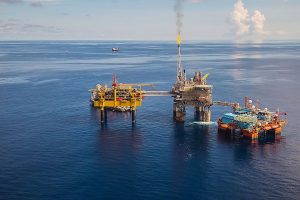
President Ferdinand R. Marcos, Jr. said earlier that he is open to resuming negotiations with China on a possible joint oil and gas exploration at Reed Bank, a resource-rich area in the South China Sea also claimed by Beijing.
In an interview with Bloomberg, Mr. Marcos said the war in the Middle East could provide “impetus” for renewed talks.
He and Chinese President Xi Jinping agreed in 2023 to restart discussions on joint energy development in the disputed waters after previous attempts collapsed over legal and sovereignty concerns.
“It is not new,” Ms. Lazaro said. “There have been discussions on oil and gas exploration many times in the past. However, there were misunderstandings on the finer points.”
In 2005, the Philippine Supreme Court voided a joint seismic survey deal involving China and Vietnam, ruling it unconstitutional for allowing foreign entities access to the country’s natural resources.
Talks resurfaced again in 2018 under the Duterte administration through a memorandum of understanding with China, but the agreement was later terminated due to constitutional and sovereignty issues.
“If ever it comes to the point that there will be discussions, we will see how it unravels,” Ms. Lazaro said, adding that negotiators are aware of the flaws that derailed past talks.
Relations between Manila and Beijing have deteriorated in recent years amid repeated confrontations in the South China Sea, where China continues to assert expansive maritime claims.
The Philippines has consistently rejected those claims, citing a 2016 ruling by the Permanent Court of Arbitration in The Hague that voided China’s position under international law.
Beyond China, Ms. Lazaro said Manila is also exploring other avenues to secure fuel supply, including efforts to ease restrictions on Russian oil.
The Philippine Embassy in Washington has been coordinating with the US State Department to seek relief from sanctions imposed on Russian energy exports, she said.
“We are asking the US State Department to lift the sanctions against Russia so that we can buy oil and meet our other energy needs,” Ms. Lazaro said, adding that no response has yet been conveyed.
The Department of Foreign Affairs is helping other agencies, particularly the Department of Energy, in identifying alternative sources of oil and relaying requests through diplomatic channels.
The Philippines has been scrambling to ensure fuel supply as the war involving Iran disrupts global oil trade. The country has about 45 days’ worth of oil inventory, according to the Energy department.
The Strait of Hormuz, which carries roughly a fifth of the world’s oil shipments, has been shut due to an Iranian blockade, compounding supply pressures.
Ms. Lazaro said the Iran war is expected to dominate discussions at the upcoming Association of Southeast Asian Nations (ASEAN) Summit, even as the bloc pushes to finalize a long-delayed code of conduct in the South China Sea.
“The war will be a dominant issue, but the South China Sea will always be part of the agenda,” she said. Meetings are scheduled later this year in Cebu and Manila.
She added that ASEAN remains hopeful the conflict would not derail progress on the code of conduct, which aims to manage disputes in the strategically vital waterway that handles trillions of dollars in annual trade.
“The bright side is that the code of conduct is being worked on, hopefully to be completed by the end of the year,” Ms. Lazaro said.
‘DWINDLING’ AID
Meanwhile, Senator Maria Imelda “Imee” R. Marcos urged the government to broaden talks with other countries to secure alternative sources of petroleum, following the declaration of a state of national energy emergency.
She called on the administration to engage more aggressively with both regional and global partners to ensure stable fuel imports.
“The Philippines should be negotiating with ASEAN neighbors such as Malaysia, Brunei, Vietnam and Thailand to secure crude oil imports,” she said in a statement.
She added that the government should also reach out to Indonesia, Australia, China and India to bolster domestic petroleum supply.
Ms. Marcos urged authorities to mobilize the Philippine National Oil Co. to pursue longer-term strategies that could cushion the impact of future energy shocks. She also called on the administration to disclose the country’s actual fuel inventory levels.
The President earlier declared a state of national energy emergency, citing the threat posed by the conflict in the Middle East to the Philippines’ oil supply.
Ms. Marcos cited measures taken by other countries, saying Myanmar has implemented fuel rationing, vehicle coding and expanded work from home arrangements, while Vietnam has reinstated its Oil Price Stabilization Fund.
“Does the government actually have a plan, or will it simply carry on distributing dwindling amounts of [aid] to select sectors?” Ms. Marcos asked, warning that subsidies might not be enough as fuel prices rise.
