

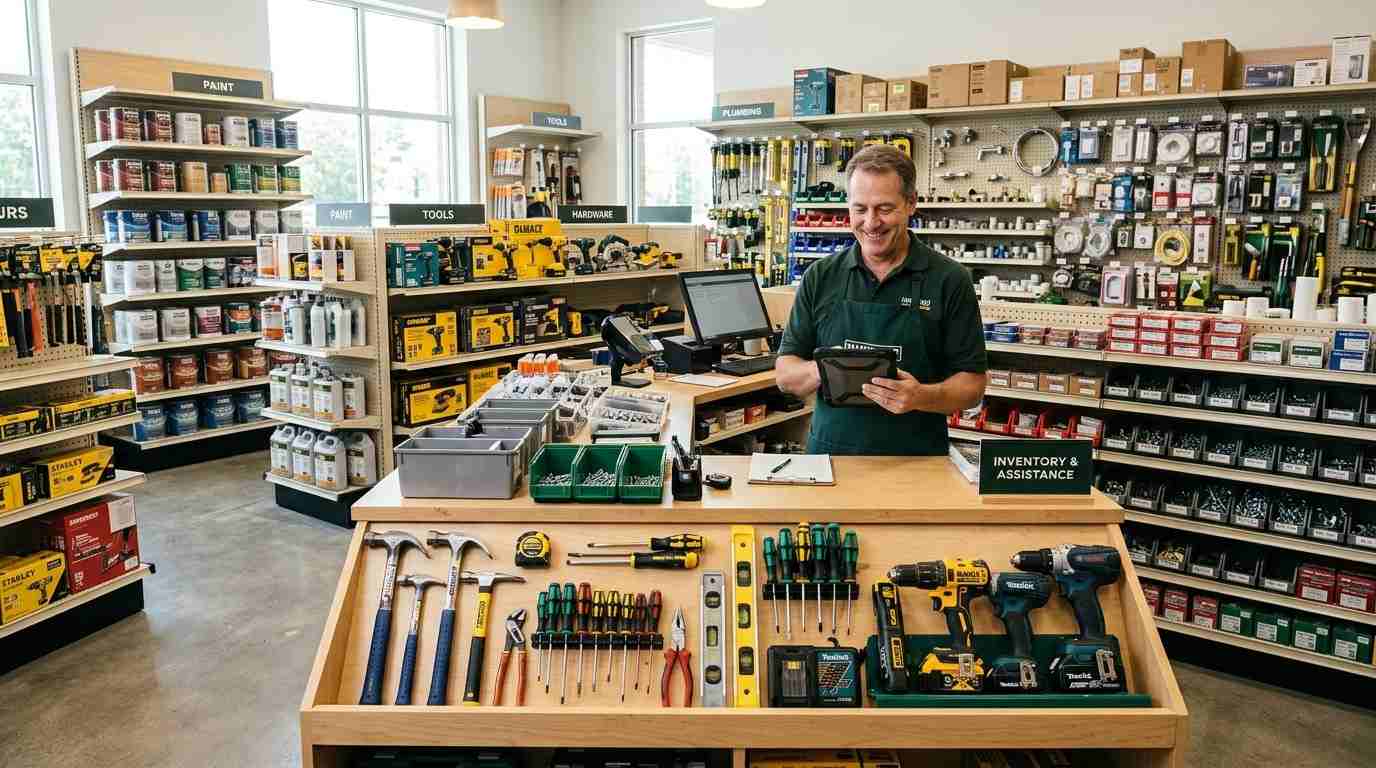
Starting a DIY and hardware store business can be a practical opportunity for entrepreneurs who want to enter the retail industry. Homeowners, contractors, builders, property managers, and people who enjoy repairing or improving their homes regularly need tools, construction materials, plumbing supplies, electrical products, and other hardware essentials.
Unlike businesses that depend on seasonal trends or changing consumer interests, hardware stores can serve customers throughout the year. People constantly need to repair damaged fixtures, replace household equipment, maintain buildings, and complete construction projects. This creates opportunities for both small neighborhood hardware shops and larger home improvement stores.
However, opening a hardware store requires careful planning. You need to select the right location, identify reliable suppliers, manage inventory, calculate product margins, and understand the needs of your target customers.
If you are considering entering the retail industry, here is a comprehensive guide to setting up a DIY and hardware store business, including the important steps to take before opening your doors.
1. Research the Local Hardware Market
Before investing money in a hardware store, study the demand for hardware and home improvement products in your target area.
Look around your neighborhood and identify existing hardware stores, construction supply shops, home improvement retailers, and specialty stores. Pay attention to their product selection, pricing, customer service, and business locations.
Consider the following questions:
- Are there many residential properties or ongoing construction projects nearby?
- Do local homeowners have convenient access to hardware supplies?
- Are existing hardware stores missing certain products?
- Do contractors and construction workers regularly purchase materials in the area?
- Are customers traveling far to buy basic tools and building supplies?
Your research should help you identify opportunities. For example, if nearby stores focus mainly on construction materials, you could specialize in DIY tools, plumbing supplies, electrical accessories, and household repair products.
You do not necessarily need to compete with the biggest hardware store. Sometimes, a smaller shop that offers convenient access, reasonable prices, and friendly service can attract a loyal customer base.
2. Create a Hardware Store Business Plan
A business plan provides direction and helps you estimate how much money you need to start and operate your store.
It does not have to be complicated, especially if you are opening a small neighborhood hardware shop. However, it should cover your business concept, target market, startup expenses, expected sales, and operating costs.
Your business plan should include:
- Business concept: Decide whether you will operate a general hardware store, DIY shop, construction supply store, or specialty hardware retailer.
- Target customers: Identify homeowners, contractors, maintenance workers, builders, and DIY enthusiasts.
- Startup capital: Estimate the money needed for rent, renovation, shelves, equipment, inventory, licenses, and other expenses.
- Pricing strategy: Determine how you will price products while remaining competitive and profitable.
- Marketing strategy: Plan how to attract customers through local advertising, social media, promotions, and partnerships.
- Financial projections: Estimate monthly sales, gross profit, operating expenses, and cash flow.
It is also important to calculate your break-even point. This tells you how much revenue your store needs to generate to cover its regular expenses.
Having a written plan can also help when applying for a small business loan or discussing financing options with potential investors.
Location plays an important role in the success of a hardware store. Customers often prefer buying tools and construction supplies from stores that are accessible and convenient.
Look for locations near residential communities, construction areas, developing subdivisions, commercial establishments, or busy roads.
Ideally, your store should have enough space for product displays, inventory storage, customer movement, and deliveries.
Consider these important location factors:
- Visibility: Choose a location that people can easily see from the road.
- Accessibility: Make sure customers can conveniently enter and leave the store.
- Parking: Provide enough space for customers, especially those purchasing bulky materials.
- Storage: Look for additional space for larger items such as pipes, lumber, ladders, and construction supplies.
- Competition: Study nearby hardware stores and determine whether your business can offer something different.
- Rental costs: Avoid choosing an expensive location that will put unnecessary pressure on your monthly operating budget.
A small store in a growing residential community may be a better investment than a large store in an expensive commercial district.
4. Register Your Business and Secure the Necessary Permits
Before opening your hardware store, make sure your business complies with local registration, taxation, and operating requirements.
Requirements vary depending on your country, state, or municipality. You may need to register your business name, obtain a business license, secure a tax identification number, and comply with zoning and fire safety regulations.
Depending on your location and product selection, additional permits may be necessary for certain regulated products, chemical storage, or specialized services.
You should also consider commercial insurance. General liability insurance, property insurance, and workers’ compensation coverage, where applicable, can help protect your business against unexpected financial losses.
Consult your local business registration office or a qualified business adviser to determine the exact requirements before starting operations.
5. Determine Your Initial Product Inventory
Inventory is one of the biggest investments when setting up a DIY and hardware store business. Your product selection should reflect what customers in your area regularly need.
Instead of purchasing hundreds of different products immediately, start with essential items that have consistent demand.
Here are some product categories to consider:
Hand Tools
- Hammers and screwdrivers
- Pliers and adjustable wrenches
- Measuring tapes and utility knives
- Handsaws and cutting tools
- Levels and other measuring equipment
Power Tools and Accessories
- Electric drills and drill bits
- Angle grinders
- Power saws
- Sanding equipment
- Extension cords and tool accessories
Plumbing Supplies
- PVC pipes and fittings
- Water faucets and valves
- Hoses and connectors
- Pipe sealants and adhesives
- Plumbing repair kits
Electrical Supplies
- Electrical wires and cables
- Switches and electrical outlets
- Circuit breakers
- Light bulbs and fixtures
- Electrical tapes and connectors
Paint and Painting Accessories
- Interior and exterior paints
- Paint brushes and rollers
- Paint trays
- Sandpaper
- Paint thinners and related supplies
Fasteners and General Hardware
- Nails and screws
- Bolts and nuts
- Hinges and door locks
- Brackets and metal fittings
- Adhesives and sealants
Safety and Protective Equipment
- Work gloves
- Safety glasses
- Hard hats
- Dust masks and respirators
- Protective footwear
These categories provide a starting point. You can expand your selection as you learn which products sell fastest and which items customers frequently request.
6. Find Reliable Hardware and Construction Suppliers
Finding dependable suppliers is essential because your product availability, purchasing costs, and profit margins depend heavily on your suppliers.
Start by contacting authorized distributors, wholesalers, manufacturers, and regional construction supply companies. Compare their prices, minimum order quantities, delivery schedules, and payment terms.
Do not automatically choose the supplier offering the lowest price. Product quality, authenticity, availability, and after-sales support are equally important.
When evaluating suppliers, consider the following:
- Wholesale pricing and available discounts
- Minimum purchase requirements
- Shipping and delivery charges
- Product warranties and return policies
- Payment terms and credit arrangements
- Availability of replacement products and spare parts
It is also wise to maintain relationships with multiple suppliers. Depending on only one distributor can create problems when products become unavailable or delivery schedules are delayed.
For a small hardware store, negotiating favorable payment terms can also help protect working capital, especially during the first few months of operation.
7. Calculate Your Startup Capital and Operating Expenses
One of the most important parts of setting up a hardware store is determining how much money you need before opening.
Your actual startup capital will depend on your location, store size, product selection, rental rates, and the type of hardware business you want to establish.
Common startup expenses include:
- Store rental deposit and advance payments
- Business registration and permits
- Store renovation and electrical installation
- Shelves, display racks, and storage cabinets
- Initial product inventory
- Cash register or point-of-sale system
- Computer, barcode scanner, and receipt printer
- Security cameras and other security equipment
- Store signage and promotional materials
- Employee salaries and initial operating expenses
- Emergency working capital
It is important to separate one-time startup expenses from recurring monthly costs.
For example, store renovation is generally a one-time expense, while rent, electricity, employee salaries, internet, and inventory replenishment are ongoing expenses.
Keep sufficient working capital available after opening. Spending your entire budget on initial inventory can leave you without enough cash to pay suppliers, employees, and other operating expenses.
8. Organize Your Store Layout and Product Displays
A well-organized hardware store makes shopping easier and encourages customers to explore more products.
Group similar products together and create clear sections for tools, plumbing supplies, electrical accessories, paint, fasteners, and safety equipment.
Use sturdy shelves and storage racks that can safely support the weight of your products. Heavy materials should be stored in appropriate low-level storage areas to reduce the risk of accidents.
Make sure commonly purchased items are easy to find. Small products such as screws, nails, washers, and electrical connectors can be organized using labeled bins or compartment storage.
Consider placing complementary products near each other. For example, keep paint brushes, rollers, masking tape, and paint trays close to the paint section.
Maintain clear price labels and aisle signs so customers can quickly identify products without constantly asking store employees for assistance.
9. Invest in a Good Inventory and POS System
Managing inventory manually can become difficult as your hardware store grows. A reliable point-of-sale (POS) and inventory management system can make daily operations more efficient.
A good system helps you track product quantities, record sales, monitor purchases, and identify items that need replenishment.
Important features to look for include:
- Barcode scanning and product registration
- Real-time inventory monitoring
- Purchase order management
- Supplier and customer records
- Sales and profit reports
- Low-stock notifications
- Product returns and exchanges
- Multiple payment methods
For a hardware store with hundreds or thousands of product variations, inventory software can help prevent stock shortages and reduce unnecessary purchases.
It also allows you to identify your best-selling products and understand which items are tying up too much money in unsold inventory.
As your business grows, consider integrating accounting software to monitor expenses, accounts payable, taxes, and overall financial performance.
10. Set Competitive Prices and Protect Your Profit Margins
Pricing is another major factor that determines whether your hardware store will be profitable.
You need to offer reasonable prices while maintaining enough margin to cover rent, salaries, utilities, transportation, and other operating expenses.
A basic way to calculate a selling price is through product markup.
For example, if you purchase a power tool for $50 and apply a 30% markup, your selling price would be $65.
However, remember that markup and profit margin are not the same thing. A $65 selling price with a $50 purchase cost produces a $15 gross profit, which represents approximately 23.1% of the selling price.
Consider these pricing strategies:
- Compare your prices with competing hardware stores.
- Offer competitive prices on frequently purchased essentials.
- Use higher-margin accessories to improve overall profitability.
- Provide volume discounts for contractors and bulk buyers.
- Review supplier price changes regularly.
- Monitor slow-moving products before offering discounts.
Never calculate profitability based on selling price alone. You must also consider operating expenses, product losses, damaged inventory, and other business costs.
11. Offer Additional Services to Increase Revenue
A hardware store does not have to depend entirely on product sales. Offering additional services can help attract customers and create more revenue opportunities.
Depending on your available space, skills, and local regulations, consider offering:
- Tool rental: Rent selected power tools, ladders, and specialized equipment to customers who only need them occasionally.
- Delivery services: Deliver bulky materials and hardware purchases to homes or construction sites.
- Paint mixing: Offer paint color matching and mixing services using appropriate equipment.
- Bulk purchasing: Provide special pricing for contractors and customers purchasing large quantities.
- Special orders: Help customers obtain specific tools, replacement parts, and construction materials that are not regularly stocked.
These services can make your store more convenient and encourage repeat purchases.
For example, contractors may prefer buying from a hardware store that can deliver materials directly to their construction projects instead of requiring them to visit multiple suppliers.
12. Build Relationships With Contractors and Local Customers
Contractors, electricians, plumbers, carpenters, painters, and construction workers can become valuable repeat customers.
Unlike occasional household buyers, these professionals regularly need tools, materials, and replacement supplies for their projects.
Introduce your business to local construction companies, maintenance teams, property managers, and independent contractors.
You can encourage long-term relationships by offering:
- Special contractor pricing
- Volume discounts
- Priority ordering for frequently purchased items
- Reliable product availability
- Convenient delivery arrangements
- Clear invoices and payment records
However, be careful when offering credit. Establish clear credit limits, payment deadlines, and collection procedures. Unpaid customer accounts can create serious cash flow problems for a small business.
13. Promote Your DIY and Hardware Store
Even if your store has excellent products and competitive prices, customers need to know that your business exists.
Start with affordable local marketing strategies that help introduce your store to nearby residents and businesses.
Here are some practical promotional ideas:
- Facebook business page: Post product arrivals, promotions, store updates, and helpful home repair tips.
- Google Business Profile: Help local customers find your store through Google Search and Maps.
- Opening promotions: Offer introductory discounts on selected tools and hardware essentials.
- Store signage: Use visible signs that clearly identify your business and product categories.
- Flyers: Distribute promotional materials to nearby residential communities and construction areas.
- Contractor partnerships: Build relationships with local builders and home improvement professionals.
- Loyalty programs: Reward repeat customers through discounts, points, or special offers.
You can also publish short educational content about basic home repairs, choosing the right tools, painting tips, and plumbing maintenance. Helpful content can attract potential customers while establishing your store as a reliable source of hardware products.
14. Hire and Train Knowledgeable Employees
Customer service is particularly important in the hardware industry because customers often need assistance choosing the correct products.
Some buyers may know exactly what they need, while others may not understand the differences between product sizes, specifications, materials, or applications.
Hire employees who are responsible, approachable, and willing to learn about hardware products.
Train your staff to understand common product categories, provide accurate information, check stock availability, and handle customer complaints professionally.
Safety training is also essential. Employees should understand how to handle heavy materials, store products properly, and follow safety instructions when dealing with paints, adhesives, and other potentially hazardous products.
Remember that knowledgeable employees can improve customer confidence and encourage repeat business.
15. Monitor Sales, Expenses, and Inventory Performance
Opening a hardware store is only the beginning. You need to monitor business performance regularly to determine whether your investment is producing satisfactory results.
Review your sales and expenses every week or month. Identify your best-selling products, slow-moving inventory, and categories that generate the highest gross profit.
Pay attention to these important business indicators:
- Daily sales: Monitor how much revenue your store generates each day.
- Gross profit margin: Determine how much money remains after deducting the cost of products sold.
- Inventory turnover: Identify how quickly products are being sold and replenished.
- Operating expenses: Track rent, salaries, utilities, transportation, and other recurring costs.
- Cash flow: Monitor incoming and outgoing money to ensure you can meet financial obligations.
- Customer retention: Observe how many customers return to purchase additional products.
Use this information to make better purchasing decisions. If certain products remain unsold for several months, consider reducing future orders or offering promotional discounts.
On the other hand, if certain plumbing fittings, electrical accessories, or hand tools sell quickly, maintaining sufficient stock can help prevent missed sales opportunities.
Common Mistakes to Avoid When Starting a Hardware Store
Many new entrepreneurs underestimate the challenges of managing a hardware retail business. Avoiding common mistakes can help protect your startup investment.
Buying Too Much Inventory Too Early
Purchasing too many products before understanding customer demand can tie up your working capital. Start with essential items and expand based on actual sales data.
Ignoring Small but Important Products
Customers frequently visit hardware stores for inexpensive items such as screws, nails, washers, connectors, and replacement fittings. These products may have relatively low individual selling prices but can generate consistent sales.
Choosing an Expensive Store Location
A large store in a premium commercial area may look attractive, but high rent can make it difficult to maintain profitability. Match your location and store size to your available capital.
Failing to Monitor Inventory
Without proper inventory records, you may lose track of missing products, overstocked items, and frequently requested supplies. Use inventory software or a reliable stock monitoring process from the beginning.
Offering Too Much Customer Credit
Giving customers unlimited credit can create cash flow problems. Establish clear payment policies and carefully evaluate customers before approving credit purchases.
Competing Only Through Low Prices
Lower prices do not automatically guarantee business success. Customers also value product availability, convenience, knowledgeable employees, reliable service, and fair return policies.
Is a DIY and Hardware Store Business Profitable?
A DIY and hardware store can be profitable when it serves a consistent local demand and maintains effective inventory and financial management.
Its potential comes from the variety of products customers need for household repairs, construction, renovations, maintenance, and improvement projects.
However, profitability depends on several factors, including:
- The number of potential customers in your area
- The quality and pricing of your products
- Your supplier relationships and purchasing costs
- Your store’s monthly operating expenses
- Your inventory turnover and stock management
- Your ability to attract repeat customers
It is also important to remember that hardware products have different profit margins. Some frequently purchased construction materials may have relatively low margins, while certain accessories, specialty tools, and small hardware items may offer better margins.
A balanced product selection can help you serve different customer needs while improving your overall sales performance.
Starting a DIY and hardware store business requires more than simply renting a space and filling it with tools and construction materials. You need a clear business plan, a suitable location, dependable suppliers, the right product selection, and an effective system for managing inventory and finances.
If you are working with limited startup capital, consider starting with a smaller neighborhood hardware shop that focuses on frequently purchased essentials. Gradually introduce additional product categories and services as your customer base and available working capital grow.
Most importantly, understand what people in your community actually need. A hardware store that offers reliable products, fair prices, convenient service, and consistent availability has a better opportunity to build customer loyalty and establish a sustainable business.
With careful planning and proper financial management, a DIY and hardware store can become a practical long-term retail business serving homeowners, contractors, and local communities.

Business News Philippines was launched in October 2015 as a portal for readers to learn more about operating a business in the Philippines.
