


By Erika Mae P. Sinaking, Reporter and Francessca S. Abalos
PRESIDENT Ferdinand R. Marcos, Jr. said hosting the 49th Association of Southeast Asian Nations (ASEAN) Summit gives the Philippines an opportunity to push regional leaders to address domestic concerns such as rising prices, energy and food security and jobs.
“This gathering is very important, especially at this time,” Mr. Marcos said in a prerecorded video message on Thursday.
He cited rising commodity and fuel costs, weakening economies in some countries and security threats as challenges facing Filipino households.
“Many of these problems cannot be solved by us alone, which is why ASEAN is so important,” he said.
Mr. Marcos said the Philippines could use its chairmanship to prioritize issues affecting Filipinos, including oil and food prices, security, agriculture, jobs and livelihoods.
He also said preparations for the summit had generated work for microenterprises, weavers, performers, hospitality workers and transport operators.
The Philippines has been under a state of national energy emergency since March, when Mr. Marcos declared it in response to disruptions in global oil supplies linked to the Iran war.
Inflation quickened to 7.8% in October from 7.2% in September, the Philippine Statistics Authority reported. It averaged 5.6% in the first 10 months of the year.
Palace Press Officer Clarissa A. Castro said the government allocated P22.9 billion for ASEAN events in 2026, covering infrastructure projects, venue restorations and security.
The P22.9-billion allocation covers all ASEAN 2026 activities and does not mean the full amount has been spent, she told reporters.
The summit program includes more than 550 meetings, 393 of which had been completed and 164 were underway or scheduled, Ms. Castro said. She added that state auditors would examine government spending after the events.
“Every peso we spend is an investment for our country and for our Filipino workers,” she said.
The Presidential Communications Office (PCO) said diplomatic proceedings would begin on Nov. 13 and 14, when additional countries are set to accede to the Treaty of Amity and Cooperation in Southeast Asia.
ASEAN member states are also set to sign the world’s first region-wide digital economy framework agreement, which aims to expand trade.
ASEAN leaders will welcome guests of the chairman, including leaders from Canada and Brazil and representatives of the International Monetary Fund, on Nov. 15.
Dialogue partners from Australia, China, India, Japan, South Korea, New Zealand, Russia, the United Nations and the US are scheduled to join plenary sessions on Nov. 16 and 17. Manila will hand the ASEAN chairmanship to Singapore on Nov. 17.
The PCO said security operations would involve 22,944 police officers and more than 3,300 traffic personnel, including 2,637 Metropolitan Manila Development Authority (MMDA) officers and 716 highway patrol personnel assigned to escort delegations.
The MMDA said major roads would remain open, with security exclusion zones limited to the Philippine International Convention Center from Nov. 9 to 18.
Authorities will suspend the vehicle number-coding scheme from Nov. 16 to 18. Shopping malls in Metro Manila will also operate from 11 a.m. to 11 p.m. starting on Monday to help ease traffic congestion.
Meanwhile, a Social Weather Stations (SWS) survey found that 91% of adult Filipinos expect the country to benefit from hosting the 2026 ASEAN leaders’ meetings.
The survey, conducted from March 24 to 31, found that 21% expected the country to benefit “very much,” 52% expected it to benefit “much,” and 17% expected it to benefit “a little.” Only 9% expected no benefit, SWS said in a statement on Wednesday.
Respondents identified rising prices and inflation as the top issues the Philippines should prioritize as host, at 19%, followed by the sea dispute with China at 16%, oil supply at 12% and poverty at 9%.
SWS also reported that net trust in ASEAN stood at a “moderate” +25 in September, down from a “good” +41 in June 2017. Among respondents aware of the organization, 46% expressed “much trust” and 21% expressed “little trust.”
Twenty-eight percent of respondents already knew the Philippines would host the meetings, while 72% said they had heard about the hosting only during the interview.
Prior awareness was highest in Metro Manila, at 42%, and among college graduates, at 55%. Net trust in ASEAN was also highest among college graduates, at +45.
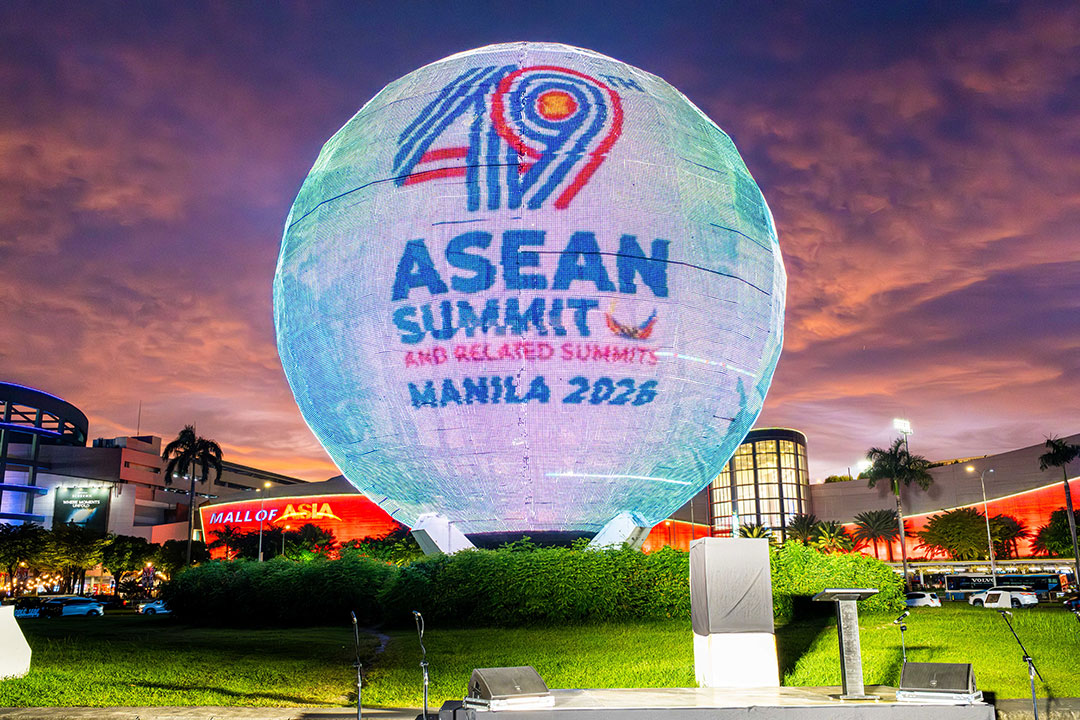
The Philippines will host the 49th ASEAN Summit from Nov. 15 to 17 at the Philippine International Convention Center in Pasay City.
The nationwide survey used face-to-face interviews with 1,500 adults and had a margin of error of ±3 percentage points.
