

In this post you’ll learn:
- The three-part framework for understanding your financial statements
- Why your balance sheet matters more than your P&L for survival
- How to forecast cash problems before they become disasters
This is a post in our series on Financial Mastery for eCom Owners, specifically Commandment #2: Master Your Financial Statements.
Your P&L could show record-high profits. And you could be on the verge of insolvency.
It sounds impossible. But it’s more common than you think.
I’ve watched store owners celebrate their best year ever, then scramble to make payroll two months later.
The problem isn’t that they weren’t profitable. The problem is they misunderstood what their financial statements were telling them.
Your Business Is an Airplane
Here’s the framework that finally made this click for me.
Think of your business as an airplane. You’ve got three instruments to monitor:
Income statement = your trajectory. It tells you if you’re pointed toward a sustainable, healthy business. If you stay on this path, will you end up where you want to go?
Balance sheet = your structural integrity. It tells you if your aircraft can handle turbulence. If you hit a storm or need to make a hard turn, will the wings stay on?
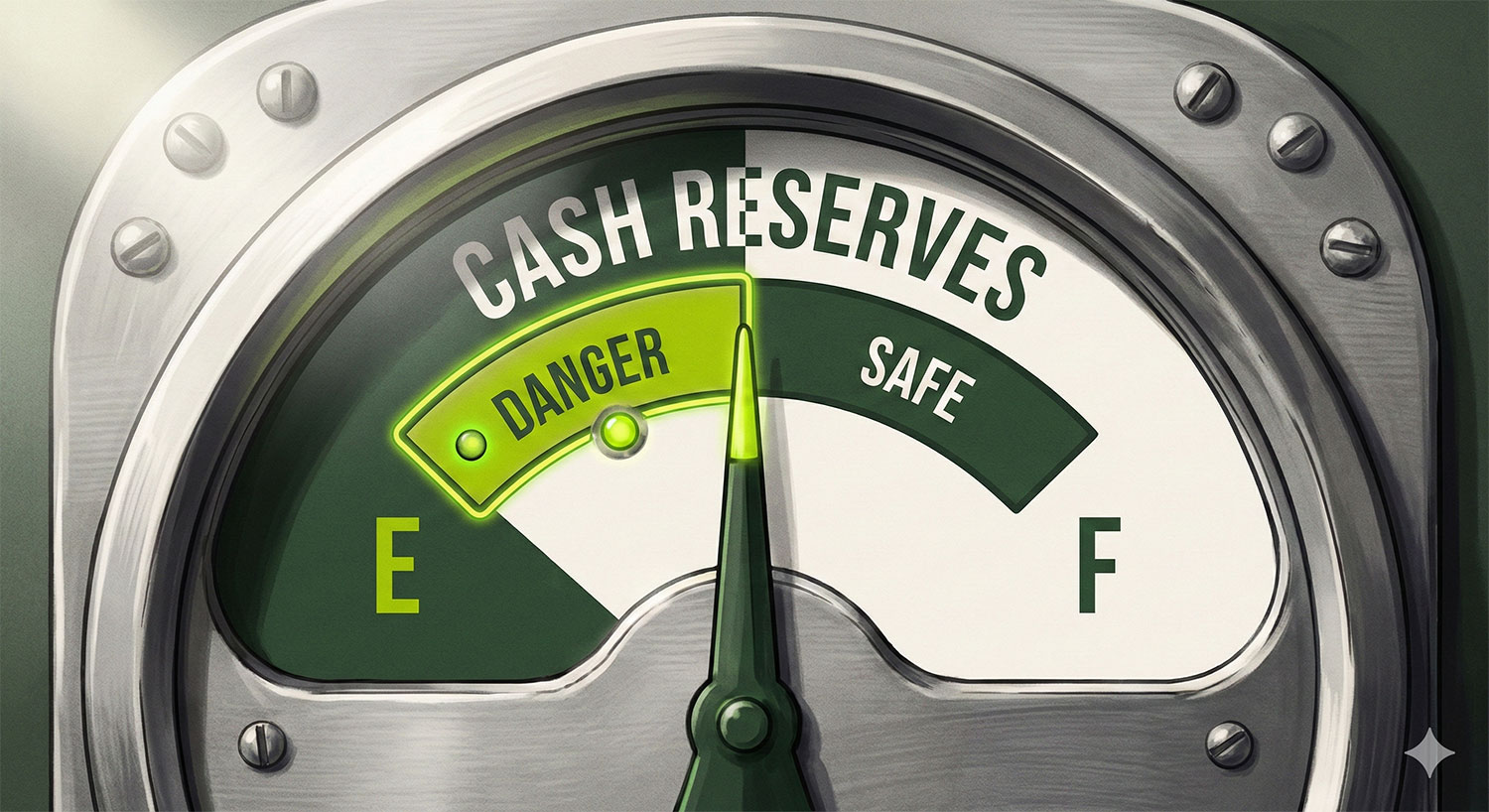
Cash flow = your fuel. You can have the nicest Gulfstream 7 on the planet. Perfect trajectory. Beautiful structural integrity. Run out of fuel and you’re going down. Hard.
Most store owners obsess over the income statement – their trajectory. They glance at the balance sheet occasionally. They ignore cash flow until it’s an emergency.
That’s like staring at your compass while your fuel gauge drops to empty.

Why Profitable Businesses Crash
Here’s a scenario that plays out constantly.
You have a great year. Your P&L says $250,000 in profit. You’re feeling good.
But that cash isn’t sitting in your bank account.
$150,000 went back into inventory for next year’s growth. Another $100,000 went to cash outflows that never hit your P&L – purchase order deposits, debt payments, owner distributions.
Bank account: empty.
Profit is an opinion. Cash is a fact.
Then the IRS calls. They want taxes on your $250,000 paper profit. That’s $75,000.
You owe $75K with nothing in the bank.
You’re underwater on your best year ever. Because profit is an opinion. Cash is a fact.

The Balance Sheet Tells You If You’ll Survive
Let me give you a choice between two businesses.
Business A:
- Revenue up 50%
- Contribution margin: 30%
Business B:
- Revenue up 20%
- Contribution margin: 25%
You want Business A, right? It’s growing faster with better margins.
Wrong choice.
Business A turns inventory once a year. All that cash is trapped in slow-moving stock. They have two weeks of operating expenses in the bank.
Business B turns inventory four times a year. They have 4 months of cash reserves.
Business A looks great on the income statement. But the balance sheet reveals the truth: one surprise expense and they’re finished.
Business B survives.

Inventory Turns & Cash Reserves
Two important metrics to watch:
Inventory Turns:
- 30-45 days: Elite management
- 2 months (6x/year): Pretty great
- 2-3 months: Average to good
- 4-6 months: Longer than ideal
- 6+ months: Below average, something’s off
Cash Reserves:
- 2-6 months of operating expenses is the target
- Harder for fast-growing businesses, but still critical
- Cash gives you options when things go wrong

Balance Sheet Hygiene
Your balance sheet only helps if it’s set up correctly.
Make sure you have sub-accounts for:
- Inventory in transit
- Pre-paid expenses
- Liabilities (especially pre-order money)
Pre-order money deserves special attention. If customers pay you before you deliver, that’s a liability – not your cash. I keep pre-order money in a completely separate account. It looks like my money. It’s not. It’s a massive obligation until delivery.
Without proper organization, you’ll look at your bank balance and think you have more than you do.
Cashflow Forecasting: Stop Looking Backward. Start Looking Forward.
The cash flow statement is one of the three official financial statements. It’s also the least useful for actually running your business.
Why? It’s backward-looking. It explains why you ran out of cash – after the fact.
What you need is a 13-week cash flow forecast.
This is a forward-looking projection of your cash position. You estimate:
- Revenue by week
- Known expenses
- Upcoming purchase orders
- Tax payments
- Any major cash events
Then you see where you’ll be 4, 8, 12 weeks from now.
You’ll be wrong. That’s okay. The point isn’t precision – it’s visibility. You want to see the cash crunch coming while you still have time to react.
Your accounting software won’t do this for you. QuickBooks and Xero track history; they don’t forecast the future. Most operators do this in a spreadsheet.
Not sure how to do a cash flow forecast? I’ve got you covered. Join the ECF newsletter and I’ll send you a number of financial resources and tools, including a customizable cash flow model I built along with a tutorial on how to use it.

Your Assignment
Answer these three questions:
- How many months of operating expenses do I have in the bank right now?
- How many times per year does my inventory turn?
- Do I know what my cash position will look like 8 weeks from now?
If you can’t answer all three confidently – or you’re worried by the answer – you’ve found your priority.
Your P&L tells you where you’re headed. Your balance sheet tells you if you’ll survive the trip. Your cash flow tells you if you have enough fuel to get there.
Watch all three instruments. Not just the one that feels good.
Want to Go Deeper?
Interested in regular insights on building a financially resilient eCom business from the archives of our 7- and 8-figure owner community? Let’s stay in touch.
