

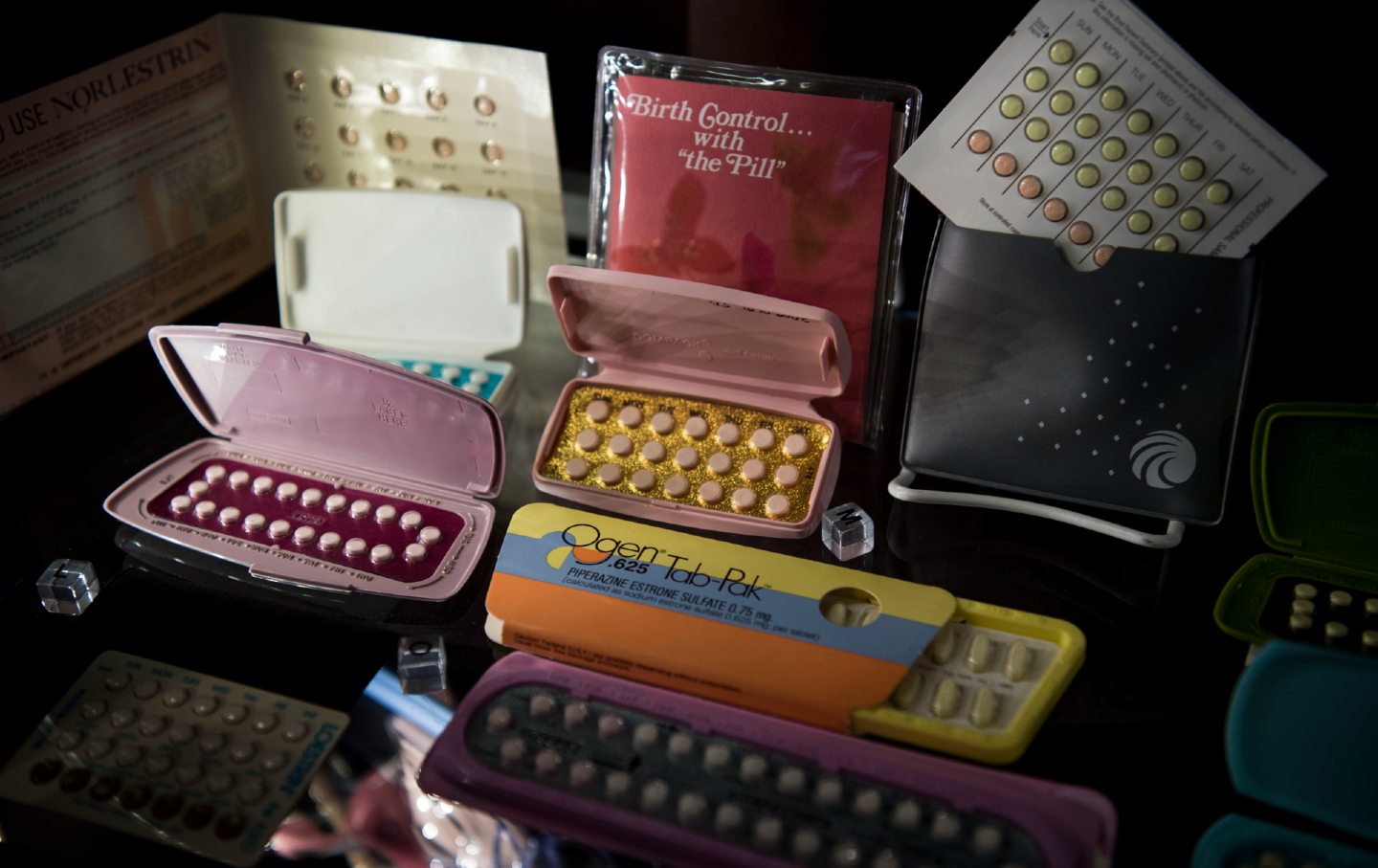
As reproductive rights shrink nationwide, university students are building grassroots networks to get contraception to their peers.
Different types of birth control on display at the American College of Obstetricians and Gynecologists Museum
(Carolyn Van Houten / The Washington Post via Getty Images)
When Lilliana Cassells moved to Alabama from New York for college, she was not prepared for how the relocation would affect her access to vital healthcare. But in Alabama, reproductive care is not seen as vital.
“It was just a culture shock coming down here and seeing how vastly different it is from New York,” said Cassells, who has been on and off birth control for health reasons throughout her life. “Up in the Northeast, this was never something that I was concerned about.”
On campus, she has met people who are scared to bring up birth control to their parents, or have no idea where to get it. So Cassells decided to get involved with reproductive rights work on campus, joining a growing army of college students nationwide who are fighting to make contraceptive access easier. With reproductive rights organization Unite for Reproductive & Gender Equity, Cassells tables on campus every Friday to give out free condoms and Plan B, and offers a free Plan B delivery service to students.
Private institutions typically determine birth control policy, but public universities are at the mercy of their state laws, which have grown far more restrictive with the 2022 reversal of Roe v. Wade. Since the Supreme Court overturned the landmark case, numerous states have increased the barrier to accessing high-quality contraceptive care, with lower-income people bearing the brunt of the fallout.
“In a state where there is restricted abortion access, you need to be very vigilant with making sure that you’re staying safe because you’re being put at risk by the legislation here,” said Cassells. Alabama has one of the nations’ harshest abortion laws—completely banning the procedure with few limited exceptions. Recently, the state also implemented abstinence-only sex education “There’s no backup plan. It puts so many students at a disadvantage.”
Nearly 20 million American women of reproductive age live in contraceptive deserts. Even in a blue state like New York, which has been lauded for its family planning legislation, the number exceeds 1.2 million. In Herkimer, Madison, and Washington counties, where several SUNY colleges are located, there is not a single reproductive health center that offers the full gamut of contraceptive services.
Current Issue

Natalie Bentley, a senior at SUNY Geneseo, witnessed how the colleges’ rural setting made it more difficult for the primarily working-class student body to access medical offices and sex education resources. So she joined the New York Birth Control Access Project (NYBCAP).
“If people are seven hours away from home and their primary doctor, being able to access reproductive care on campus is extremely important,” she said.
Organizations such as NYBCAP, which work to increase birth control access at the local level, prioritize convenience and affordability in their distribution. For advocates, one of the best solutions has been contraceptive vending machines.
NYBCAP’s machines dispense emergency contraceptives, condoms, and non-hormonal pills. The machines have been installed at various campuses across the state, including NYU, Cornell, and several CUNY and SUNY institutions. At Geneseo, Bentley’s machine not only sells contraceptives but also menstrual supplies and over-the-counter medication like Tylenol.
“To me, emergency contraception always felt so out of reach due to the price and stigma,” Bentley said. “It is amazing to know all my peers can now use those resources.”
When Luca Cassidy was a student at Binghamton University, he recalled having to buy birth control for his female friends and classmates who felt “uncomfortable.”
Cassidy graduated in 2025, and one of his most memorable accomplishments on campus came as a NYBCAP member, when he became involved with the Emergency Contraception for Every Campus project and with other student advocates successfully fought for a vending machine that sold emergency contraceptives for under $10.
“At the end of the day, we’re not changing what the Supreme Court did. We had no power over that. But we could improve something locally,” Cassidy said. “Working with NYBCAP has really shown me just how birth control gives people a lot of options in life,” he continued.
Meanwhile, at the CUNY School of Medicine, aspiring obstetrician gynecologist Sarah Vincent dedicated her first year to bolstering institutional reproductive access.
“Hearing about the medical racism that has caused disparities, especially in maternal mortality rates, inspired me. Being a queer woman of color gives me added perspective,” she said. “The intersectionality within my identity fuels my advocacy because I’m a part of the community that’s struggling and I want to be able to help them.”
Working with activists, Vincent secured over 200 signatures for a contraceptive vending machine on her campus in Harlem. At her campus machine, which would include affordable emergency contraception, menstrual products, and other sexual wellness items, activists were also hoping to sell Opill, the first FDA-approved over-the-counter birth control, which is fully progesterone. However, the proposition brought about administrative concerns regarding the legality of selling birth control pills through vending machines, though it was still allowed to be distributed through tabling on campus.
“We were asked whether emergency contraception was the abortion pill—people are not informed,” Vincent said. “When there’s confusion, it very quickly inspires fear and then hatred and disengagement, so we need engagement and education. The government should not be a consideration in the provider’s mind or in the patient’s mind when being treated.”
Because CUNY is a public university, increasing contraceptive access on campus is a more straightforward process as long as it adheres to state laws. The battle at private institutions looks different. Religious schools like DePaul University in Chicago are especially restrictive: The school prohibits the distribution of any kind of birth control on campus, as it’s deemed a “conflict” with the school’s Catholic doctrine.
At Loyola University’s Chicago campus, the Jesuit school follows a similar code—contraception is not distributed, with fertility tracking being one of the only “accepted” forms. General reproductive health care services (such as STI testing and ob-gyns) are difficult to access and come at an additional cost to students. So, in 2016, Students for Reproductive Justice (SRJ) was founded.
Alexander Schepker, an outreach organizer for the group, said the organization was originally created by students as a response to the first Trump presidency, and fears about potential rollbacks on reproductive rights.
Popular
“swipe left below to view more authors”Swipe →
Thanks to donations and partnerships from local Chicago organizations, SRJ gives out free contraceptives—Schepker said that their “Free Condom Fridays” will pass out upwards of 600 condoms in as little as 15 minutes.
As SRJ is an unregistered student organization (in part an intentional choice due to the campus restrictions on contraceptives), it is not allowed to operate on campus. So giveaways happen at a public bus stop. SRJ also offers free delivery of contraceptive, safe-sex, and harm-reduction products within one mile of campus..
Due to federal funding cuts and crackdowns that impact reproductive organizations, Schepker faces the trouble of finding new avenues to provide emergency contraceptives and other key resources. But, despite the hurdles, SRJ has been pushing forward.
“All it takes is a small group of people to become something like we are today,” they said. “It just started with a few students and a dream to help a community, which is kind of a beautiful thing.”
Increasing contraceptive access on campuses not only alleviates students of monetary and proximity obstacles, but also privacy concerns.
Issues like cyber security remain a threat to reproductive justice, said Kat Sanchez, the policy director of reproductive rights organization Bold Futures. This is especially true in an age when virtual abortion pill and telehealth providers act as a lifeline for many. Already, the Texas Legislature passed an abortion-pill bounty-hunter law—legislation that allows people to sue Texans for receiving or providing abortion pills, which can be ordered online.
“We are incredibly conscious in our state, that is the case that people are using our digital information against us,” Sanchez said. “That intersectionality comes into play because some of these folks may have differing documented statuses. And so that information can be used in a multifaceted way to criminalize either for getting access to abortion care or because of their differing documented status. This isn’t just a reproductive health care issue. Our digital safety is an issue everybody should be concerned about.”
With rising digital security concerns, student activists are finding creative ways to provide students with their contraceptive need. At the University of Florida, Ana Perez leads the Brown Bag Project, a free delivery service for contraceptives and safe sex items. Since the project began two years ago, Perez has receieved up to a thousand orders. In between delivering the brown bags, Perez, a Florida native, was fighting for the state to legalize abortion, which ultimately failed. With high costs to travel out of state and legislations like the Targeted Regulation of Abortion Providers shutting down clinics, reproductive care has become hard for Floridians and students alike.
After November 6, 2024, Perez saw her usual number of orders skyrocket. And as Florida’s six-week abortion ban became official, the numbers kept growing.
“I got to see in real time people’s reaction to the election and the restrictions becoming permanent,” she said.
From illegal war on Iran to an inhumane fuel blockade of Cuba, from AI weapons to crypto corruption, this is a time of staggering chaos, cruelty, and violence.
Unlike other publications that parrot the views of authoritarians, billionaires, and corporations, The Nation publishes stories that hold the powerful to account and center the communities too often denied a voice in the national media—stories like the one you’ve just read.
Each day, our journalism cuts through lies and distortions, contextualizes the developments reshaping politics around the globe, and advances progressive ideas that oxygenate our movements and instigate change in the halls of power.
This independent journalism is only possible with the support of our readers. If you want to see more urgent coverage like this, please donate to The Nation today.
More from The Nation

Midwestern Nice… Today’s “Jewish Question”…
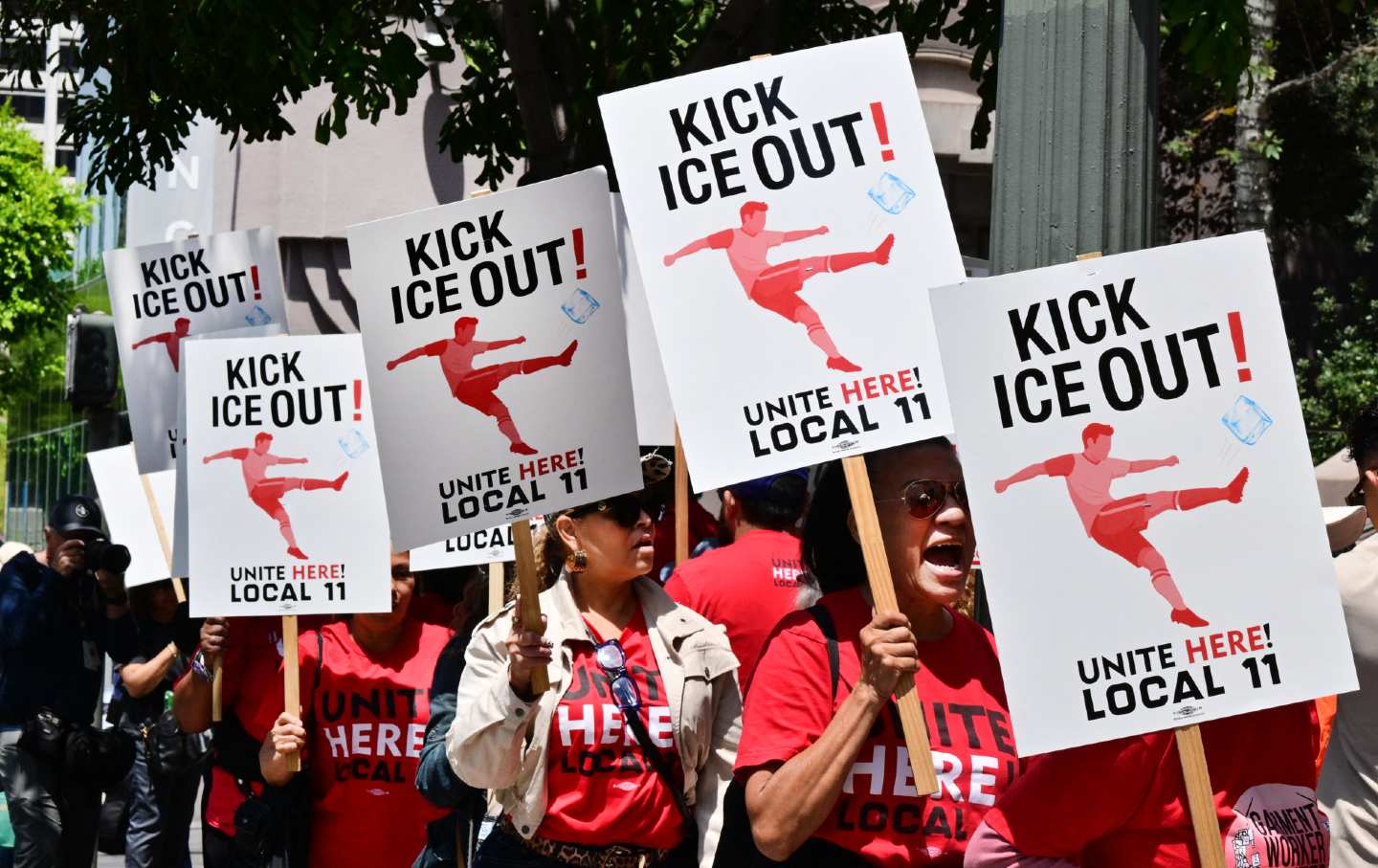
Communities in World Cup host cities across the United States are organizing to ensure that the tournament lives up to its promise of making soccer a force for good.
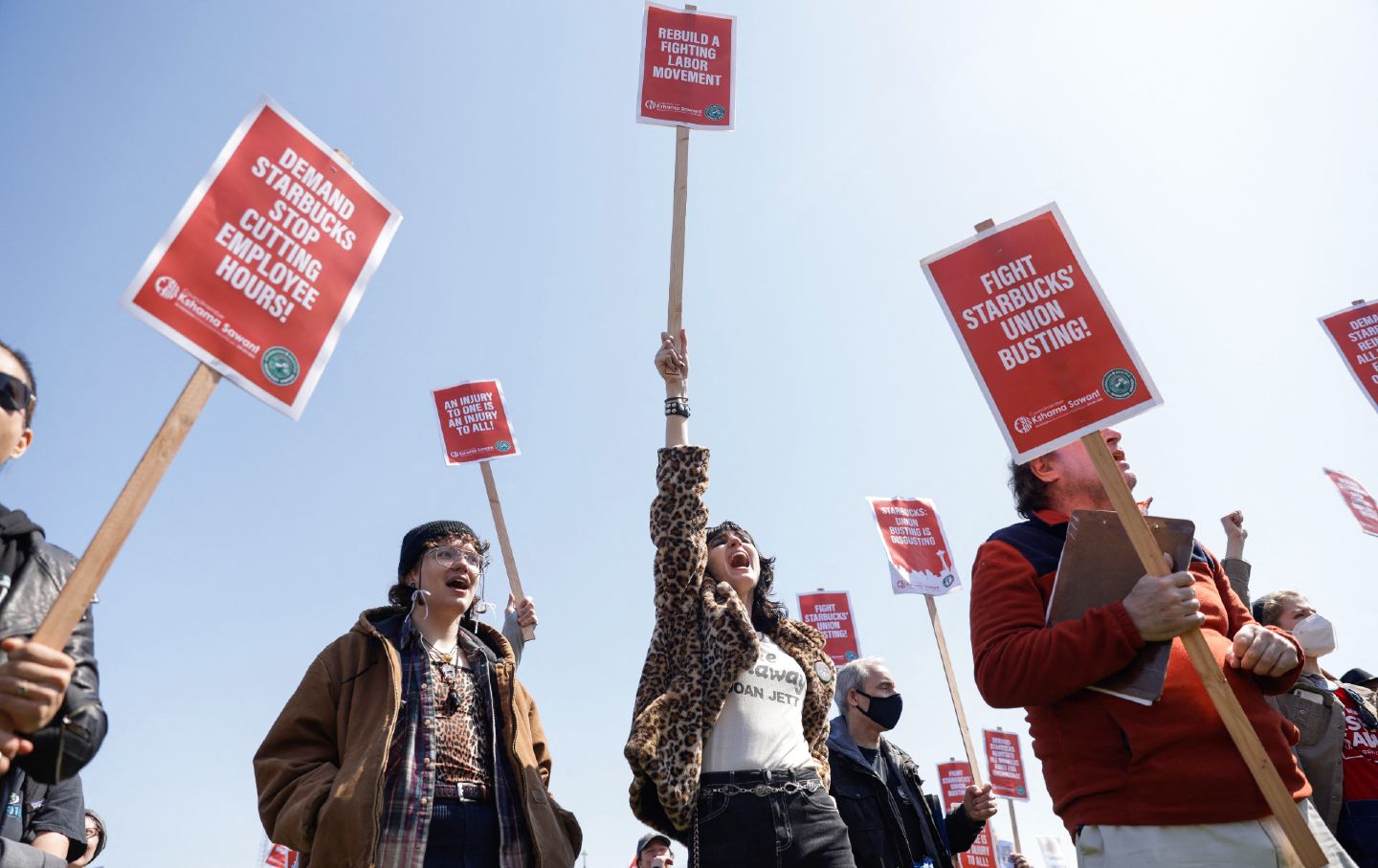
A new labor nonprofit called Union Now is trying to help workers weather firings, delays, and first-contract battles. We could’ve used their help in our Starbucks campaigns.
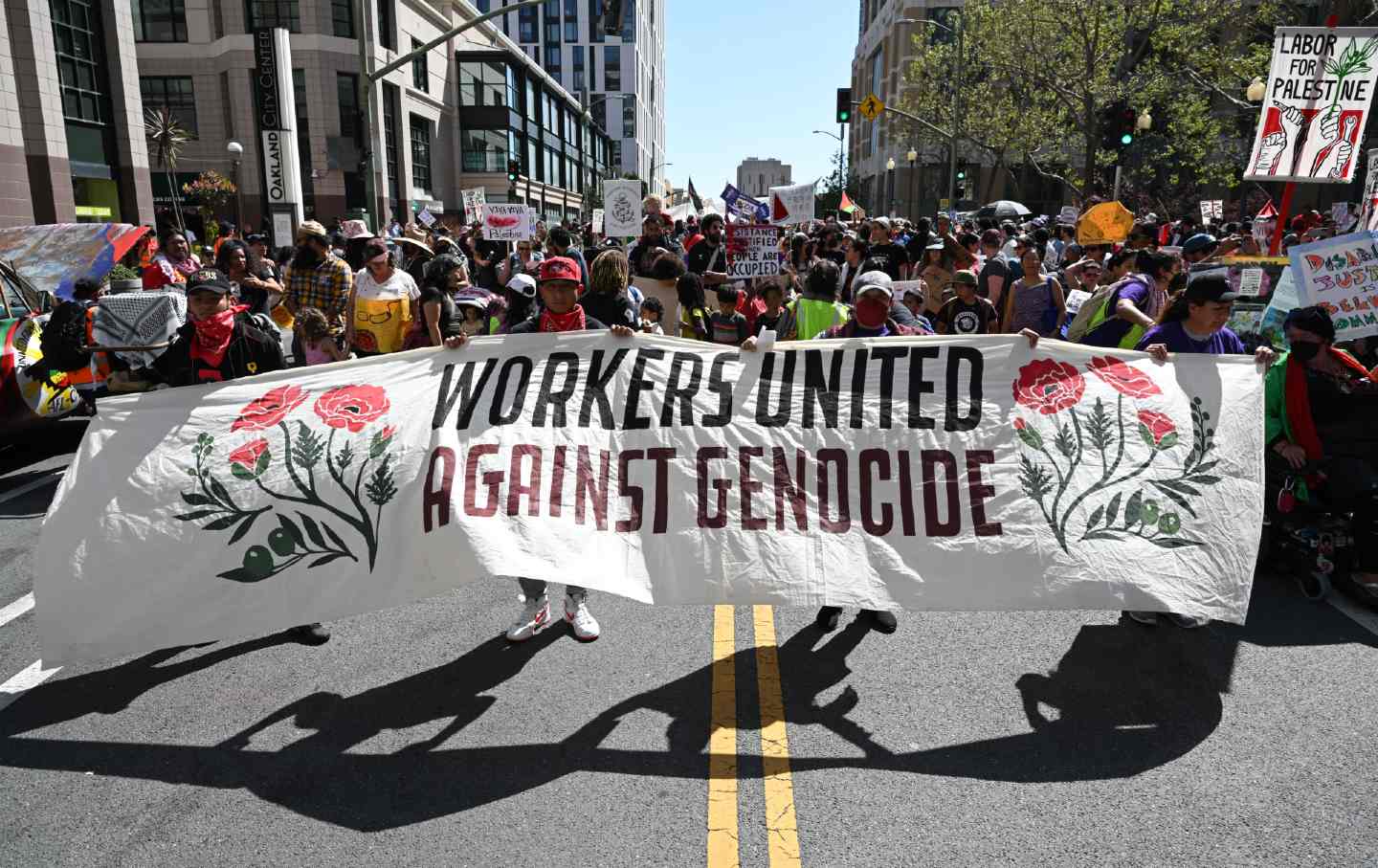
This year’s demonstrations will be vast and infused with the politics of Jewish Labor Bund.

The mayor wants to deepen his city’s collaboration with ICE. The people have other ideas.
