

Reporting Highlights
- Civilian Harm: In the opening days of the war with Iran, missile strikes have already killed civilians, including scores of schoolchildren.
- Blueprint Stalled: The Pentagon had been working on a plan to avoid civilian deaths. It was heading toward implementation until Trump officials waylaid it last year.
- Scant Accountability: With the plan to reduce civilian deaths sidelined, experts say the U.S. military plans face limited scrutiny before attacks are launched.
These highlights were written by the reporters and editors who worked on this story.
Images from the missile strike in southern Iran were more horrifying than any of the case studies Air Force combat veteran Wes J. Bryant had pored over in his mission to overhaul how the U.S. military safeguards civilian life.
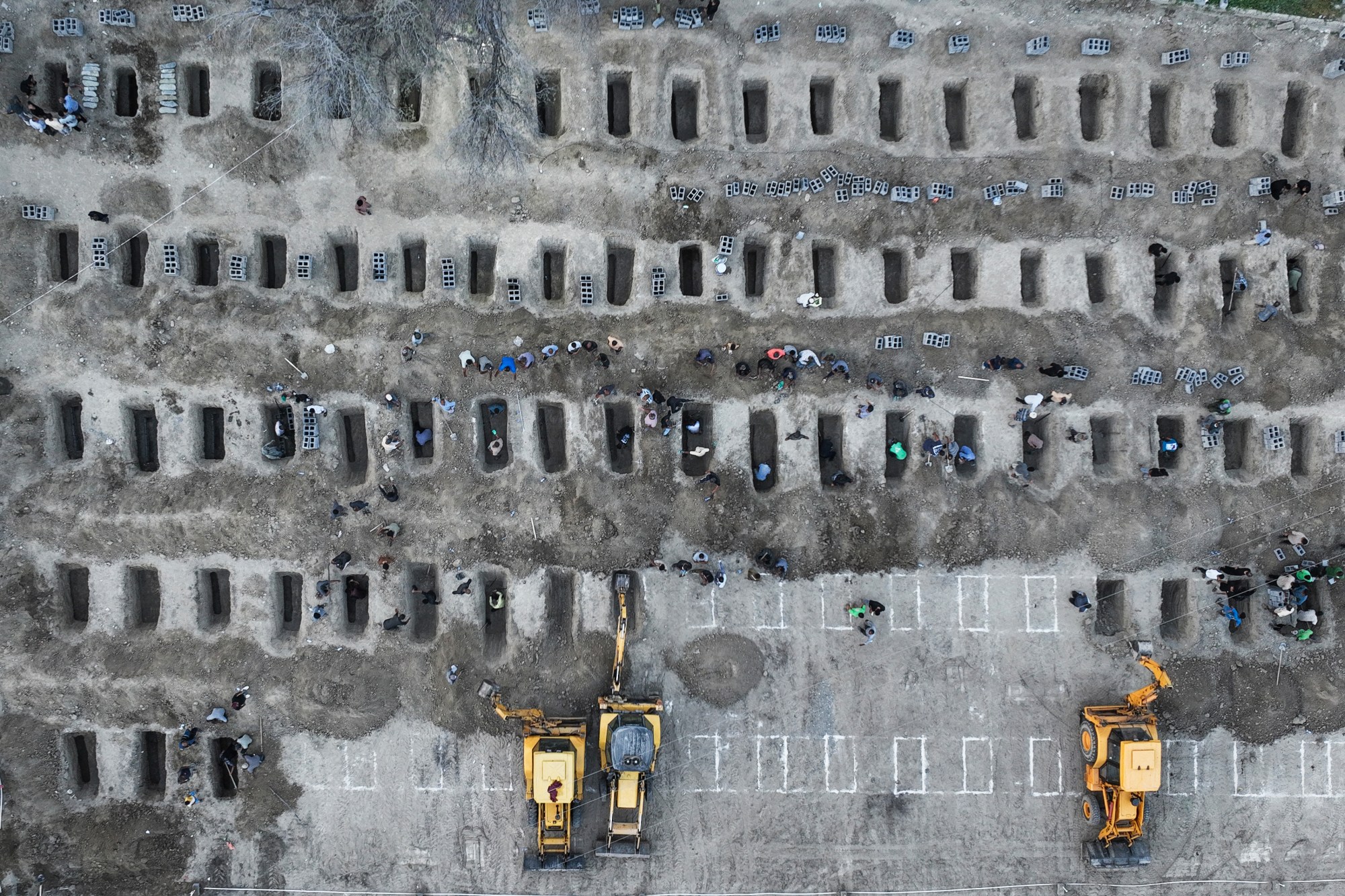
Parents wept over their children’s bodies. Crushed desks and blood-stained backpacks poked through the rubble. The death toll from the attack on an elementary school in Minab climbed past 165, most of them under age 12, with nearly 100 others wounded, according to Iranian health officials. Photos of small coffins and rows of fresh graves went viral, a devastating emblem of Day 1 in the open-ended U.S.-Israeli war in Iran.
Bryant, a former special operations targeting specialist, said he couldn’t help but think of what-ifs as he monitored fallout from the Feb. 28 attack.
Just over a year ago, he had been a senior adviser in an ambitious new Defense Department program aimed at reducing civilian harm during operations. Finally, Bryant said, the military was getting serious about reforms. He worked out of a newly opened Civilian Protection Center of Excellence, where his supervisor was a veteran strike-team targeter who had served as a United Nations war crimes investigator.
Today, that momentum is gone. Bryant was forced out of government in cuts last spring. The civilian protection mission was dissolved as Defense Secretary Pete Hegseth made “lethality” a top priority. And the world has witnessed a tragedy in Minab that, if U.S. responsibility is confirmed, would be the most civilians killed by the military in a single attack in decades.
Dismantling the fledgling harm-reduction effort, defense analysts say, is among several ways the Trump administration has reorganized national security around two principles: more aggression, less accountability.
Trump and his aides lowered the authorization level for lethal force, broadened target categories, inflated threat assessments and fired inspectors general, according to more than a dozen current and former national security personnel. Nearly all spoke on condition of anonymity for fear of retaliation.
“We’re departing from the rules and norms that we’ve tried to establish as a global community since at least World War II,” Bryant said. “There’s zero accountability.”
Citing open-source intelligence and government officials, several news outlets have concluded that the strike in Minab most likely was carried out by the United States. President Donald Trump, without providing evidence, told reporters March 7 that it was “done by Iran.” Hegseth, standing next to the president aboard Air Force One, said the matter was under investigation.
The next day, the open-source research outfit Bellingcat said it had authenticated a video showing a Tomahawk missile strike next to the school in Minab. Iranian state media later showed fragments of a U.S.-made Tomahawk, as identified by Bellingcat and others, at the site. The United States is the only party to the conflict known to possess Tomahawks. U.N. human rights experts have called for an investigation into whether the attack violated international law.
The Department of Defense and White House did not respond to requests for comment.
Since the post-9/11 invasions of Afghanistan and Iraq, successive U.S. administrations have faced controversies over civilian deaths. Defense officials eager to shed the legacy of the “forever wars” have periodically called for better protections for civilians, but there was no standardized framework until 2022, when Biden-era leaders adopted a strategy rooted in work that had begun under the first Trump presidency.
Formalized in a 2022 action plan and in a Defense Department instruction, the initiatives are known collectively as Civilian Harm Mitigation and Response, a clunky name often shortened to CHMR and pronounced “chimmer.” Around 200 personnel were assigned to the mission, including roughly 30 at the Civilian Protection Center of Excellence, a coordination hub near the Pentagon.
The CHMR strategy calls for more in-depth planning before an attack, such as real-time mapping of the civilian presence in an area and in-depth analysis of the risks. After an operation, reports of harm to noncombatants would prompt an assessment or investigation to figure out what went wrong and then incorporate those lessons into training.
By the time Trump returned to power, harm-mitigation teams were embedded with regional commands and special operations leadership. During Senate confirmation hearings, several Trump nominees for top defense posts voiced support for the mission. Once in office, however, they stood by as the program was gutted, current and former national security officials said.
Around 90% of the CHMR mission is gone, former personnel said, with no more than a single adviser now at most commands. At Central Command, where a 10-person team was cut to one, “a handful” of the eliminated positions were backfilled to help with the Iran campaign. Defense officials can’t formally close the Civilian Protection Center of Excellence without congressional approval, but Bryant and others say it now exists mostly on paper.
“It has no mission or mandate or budget,” Bryant said.
Spike in Strikes
Global conflict monitors have since recorded a dramatic increase in deadly U.S. military operations. Even before the Iran campaign, the number of strikes worldwide since Trump returned to office had surpassed the total from all four years of Joe Biden’s presidency.
Had the Defense Department’s harm-reduction mission continued apace, current and former officials say, the policies almost certainly would’ve reduced the number of noncombatants harmed over the past year.
Beyond the moral considerations, they added, civilian casualties fuel militant recruiting and hinder intelligence-gathering. Retired Gen. Stanley McChrystal, who commanded U.S. and NATO forces in Afghanistan, explains the risk in an equation he calls “insurgent math”: For every innocent killed, at least 10 new enemies are created.
U.S.-Israeli strikes have already killed more than 1,200 civilians in Iran, including nearly 200 children, according to Human Rights Activists News Agency, a U.S.-based group that verifies casualties through a network in Iran. The group says hundreds more deaths are under review, a difficult process given Iran’s internet blackout and dangerous conditions.

Defense analysts say the civilian toll of the Iran campaign, on top of dozens of recent noncombatant casualties in Yemen and Somalia, reopens dark chapters from the “war on terror” that had prompted reforms in the first place.
“It’s a recipe for disaster,” a senior counterterrorism official who left the government a few months ago said of the Trump administration’s yearlong bombing spree. “It’s ‘Groundhog Day’ — every day we’re just killing people and making more enemies.”
In 2015, two dozen patients and 14 staff members were killed when a heavily armed U.S. gunship fired for over an hour on a Doctors Without Borders hospital in northern Afghanistan, a disaster that has become a cautionary tale for military planners.
“Our patients burned in their beds, our medical staff were decapitated or lost limbs. Others were shot from the air while they fled the burning building,” the international aid group said in a report about the destruction of its trauma center in Kunduz.
A U.S. military investigation found that multiple human and systems errors had resulted in the strike team mistaking the building for a Taliban target. The Obama administration apologized and offered payouts of $6,000 to families of the dead.
Human rights advocates had hoped the Kunduz debacle would force the U.S. military into taking concrete steps to protect civilians during U.S. combat operations. Within a couple years, however, the issue came roaring back with high civilian casualties in U.S.-led efforts to dislodge Islamic State extremists from strongholds in Syria and Iraq.

In a single week in March 2017, U.S. operations resulted in three incidents of mass civilian casualties: A drone attack on a mosque in Syria killed around 50; a strike in another part of Syria killed 40 in a school filled with displaced families; and bombing in the Iraqi city of Mosul led to a building collapse that killed more than 100 people taking shelter inside.
In heavy U.S. fighting to break Islamic State control over the Syrian city of Raqqa, “military leaders too often lacked a complete picture of conditions on the ground; too often waved off reports of civilian casualties; and too rarely learned any lessons from strikes gone wrong,” according to an analysis by the Pentagon-adjacent Rand Corp. think tank.
“Do It Right Now”
Under pressure from lawmakers, Trump’s then-Defense Secretary James Mattis ordered a review of civilian casualty protocols.
Released in 2019, the review Mattis launched was seen by some advocacy groups as narrow in scope but still a step in the right direction. Yet the issue soon dropped from national discourse, overshadowed by the coronavirus pandemic and landmark racial justice protests.
During the Biden administration’s chaotic withdrawal of U.S. forces from Afghanistan in August 2021, a missile strike in Kabul killed an aid worker and nine of his relatives, including seven children. Then-Defense Secretary Lloyd Austin apologized and said the department would “endeavor to learn from this horrible mistake.”
That incident, along with a New York Times investigative series into deaths from U.S. airstrikes, spurred the adoption of the Civilian Harm Mitigation and Response action plan in 2022. When they established the new Civilian Protection Center of Excellence the next year, defense officials tapped Michael McNerney — the lead author of the blunt RAND report — to be its director.
“The strike against the aid worker and his family in Kabul pushed Austin to say, ‘Do it right now,’” Bryant said.
The first harm-mitigation teams were assigned to leaders in charge of some of the military’s most sensitive counterterrorism and intelligence-gathering operations: Central Command at MacDill Air Force Base in Tampa, Florida; the Joint Special Operations Command at Fort Bragg, North Carolina; and Africa Command in Stuttgart, Germany.
A former CHMR adviser who joined in 2024 after a career in international conflict work said he was reassured to find a serious campaign with a $7 million budget and deep expertise. The adviser spoke on condition of anonymity for fear of retaliation.
Only a few years before, he recalled, he’d had to plead with the Pentagon to pay attention. “It was like a back-of-the-envelope thing — the cost of a Hellfire missile and the cost of hiring people to work on this.”
Bryant became the de facto liaison between the harm-mitigation team and special operations commanders. In December, he described the experience in detail in a private briefing for aides of Sen. Chris Van Hollen, D-Md., who had sought information on civilian casualty protocols involving boat strikes in the Caribbean Sea.
Bryant’s notes from the briefing, reviewed by ProPublica, describe an embrace of the CHMR mission by Adm. Frank Bradley, who at the time was head of the Joint Special Operations Command. In October, Bradley was promoted to lead Special Operations Command.
At the end of 2024 and into early 2025, Bryant worked closely with the commander’s staff. The notes describe Bradley as “incredibly supportive” of the three-person CHMR team embedded in his command.
Bradley, Bryant wrote, directed “comprehensive lookbacks” on civilian casualties in errant strikes and used the findings to mandate changes. He also introduced training on how to integrate harm prevention and international law into operations against high-value targets. “We viewed Bradley as a model,” Bryant said.
Still, the military remained slow to offer compensation to victims and some of the new policies were difficult to independently monitor, according to a report by the Stimson Center, a foreign policy think tank. The CHMR program also faced opposition from critics who say civilian protections are already baked into laws of war and targeting protocols; the argument is that extra oversight “could have a chilling effect” on commanders’ abilities to quickly tailor operations.
To keep reforms on track, Bryant said, CHMR advisers would have to break through a culture of denial among leaders who pride themselves on precision and moral authority.
“The initial gut response of all commands,” Bryant said, “is: ‘No, we didn’t kill civilians.’”
Reforms Unraveled
As the Trump administration returned to the White House pledging deep cuts across the federal government, military and political leaders scrambled to preserve the Civilian Harm Mitigation and Response framework.
At first, CHMR advisers were heartened by Senate confirmation hearings where Trump’s nominees for senior defense posts affirmed support for civilian protections.
Gen. Dan Caine, chairman of the Joint Chiefs of Staff, wrote during his confirmation that commanders “see positive impacts from the program.” Elbridge Colby, undersecretary of defense for policy, wrote that it’s in the national interest to “seek to reduce civilian harm to the degree possible.”
When questioned about cuts to the CHMR mission at a hearing last summer, U.S. Navy Vice Adm. Brad Cooper, head of Central Command, said he was committed to integrating the ideas as “part of our culture.”
Despite the top-level support, current and former officials say, the CHMR mission didn’t stand a chance under Hegseth’s signature lethality doctrine.
The former Fox News personality, who served as an Army National Guard infantry officer in Iraq and Afghanistan, disdains rules of engagement and other guardrails as constraining to the “warrior ethos.” He has defended U.S. troops accused of war crimes, including a Navy SEAL charged with stabbing an imprisoned teenage militant to death and then posing for a photo with the corpse.
A month after taking charge, Hegseth fired the military’s top judge advocate generals, known as JAGs, who provide guidance to keep operations in line with U.S. or international law. Hegseth has described the attorneys as “roadblocks” and used the term “jagoff.”
At the Civilian Protection Center of Excellence, the staff tried in vain to save the program. At one point, Bryant said, he even floated the idea of renaming it the “Center for Precision Warfare” to put the mission in terms Hegseth wouldn’t consider “woke.”
By late February 2025, the CHMR mission was imploding, say current and former defense personnel.
Shortly before his job was eliminated, Bryant openly spoke out against the cuts in The Washington Post and Boston Globe, which he said landed him in deep trouble at the Pentagon. He was placed on leave in March, his security clearance at risk of revocation.
Bryant formally resigned in September and has since become a vocal critic of the administration’s defense policies. In columns and on TV, he warns that Hegseth’s cavalier attitude toward the rule of law and civilian protections is corroding military professionalism.
Bryant said it was hard to watch Bradley, the special operations commander and enthusiastic adopter of CHMR, defending a controversial “double-tap” on an alleged drug boat in which survivors of a first strike were killed in a follow-up hit. Legal experts have said such strikes could violate laws of warfare. Bradley did not respond to a request for comment.
“Everything else starts slipping when you have this culture of higher tolerance for civilian casualties,” Bryant said.
Concerns were renewed in early 2025 with the Trump administration’s revived counterterrorism campaign against Islamist militants regrouping in parts of Africa and the Middle East.
Last April, a U.S. air strike hit a migrant detention center in northwestern Yemen, killing at least 61 African migrants and injuring dozens of others in what Amnesty International says “qualifies as an indiscriminate attack and should be investigated as a war crime.”
Operations in Somalia also have become more lethal. In 2024, Biden’s last year in office, conflict monitors recorded 21 strikes in Somalia, with a combined death toll of 189. In year one of Trump’s second term, the U.S. carried out at least 125 strikes, with reported fatalities as high as 359, according to the New America think tank, which monitors counterterrorism operations.
“It is a strategy focused primarily on killing people,” said Alexander Palmer, a terrorism researcher at the Washington-based Center for Strategic and International Studies.
Last September, the U.S. military announced an attack in northeastern Somalia targeting a weapons dealer for the Islamist militia Al-Shabaab, a U.S.-designated terrorist group. On the ground, however, villagers said the missile strike incinerated Omar Abdullahi, a respected elder nicknamed “Omar Peacemaker” for his role as a clan mediator.
After the death, the U.S. military released no details, citing operational security.
“The U.S. killed an innocent man without proof or remorse,” Abdullahi’s brother, Ali, told Somali news outlets. “He preached peace, not war. Now his blood stains our soil.”
In Iran, former personnel say, the CHMR mission could have made a difference.
Under the scrapped harm-prevention framework, they said, plans for civilian protection would’ve begun months ago, when orders to draw up a potential Iran campaign likely came down from the White House and Pentagon.
CHMR personnel across commands would immediately begin a detailed mapping of what planners call “the civilian environment,” in this case a picture of the infrastructure and movements of ordinary Iranians. They would also check and update the “no-strike list,” which names civilian targets such as schools and hospitals that are strictly off-limits.
One key question is whether the school was on the no-strike list. It sits a few yards from a naval base for the Iranian Revolutionary Guard. The building was formerly part of the base, though it has been marked on maps as a school since at least 2013, according to visual forensics investigations.
“Whoever ‘hits the button’ on a Tomahawk — they’re part of a system,” the former adviser said. “What you want is for that person to feel really confident that when they hit that button, they’re not going to hit schoolchildren.”
If the guardrails failed and the Defense Department faced a disaster like the school strike, Bryant said, CHMR advisers would’ve jumped in to help with transparent public statements and an immediate inquiry.
Instead, he called the Trump administration’s response to the attack “shameful.”
“It’s back to where we were years ago,” Bryant said. If confirmed, “this will go down as one of the most egregious failures in targeting and civilian harm-mitigation in modern U.S. history.”
