

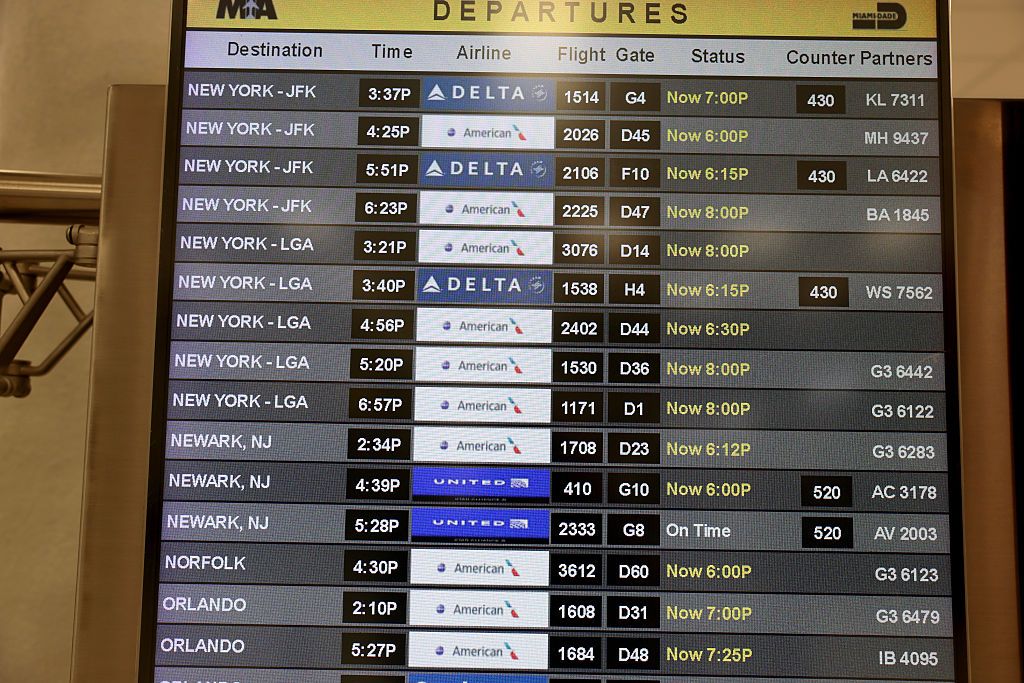
- Faulty equipment at an Arkansas router and a Texas system caused the FAA to ground departing flights nationwide Friday.
- More than 14,000 flights were canceled across Friday and Saturday, with delays persisting through the weekend.
- Officials found no evidence of malicious activity or AI involvement, but the incident highlights urgent needs for infrastructure modernization funding.
Thousands of travelers were left stranded across the country after a rare nationwide aviation shutdown grounded departing flights Friday, Nov. 13, exposing major concerns about America’s aging air traffic control infrastructure.
Now, new details are emerging about what caused the widespread disruption, as federal officials investigate faulty communications equipment and airlines continue scrambling to recover from more than 14,000 flight cancellations.

According to ABC News’ ongoing coverage, more than 14,000 flights were canceled Friday and Saturday, with more than 900 additional cancellations reported Sunday morning. Although the Federal Aviation Administration (FAA) lifted the nationwide ground stop Friday evening, passengers continued experiencing delays, missing luggage and canceled flights throughout the weekend.
Transportation Secretary Sean Duffy revealed Sunday that investigators were examining a communications router in El Dorado, Arkansas, that may have contributed to the nationwide shutdown.

During an appearance on ABC’s This Week, Duffy explained that crews were replacing outdated copper wiring with fiber-optic cables when a router was activated, triggering problems across the air traffic control network.
Officials also detected issues involving another system in Amarillo, Texas, that had been replaced approximately three weeks earlier.
“So we’re looking at those two issues and trying to find the root cause of what happened,” Duffy said.
According to ABC News, the Arkansas router was sent to an L3Harris laboratory in Florida for further examination. FAA personnel are working alongside the FBI and other law enforcement agencies to determine exactly what happened.
The transportation secretary also revealed that officials disabled the ability of 69 routers across the national airspace system to broadcast data while the investigation continues.
Once that broadcasting capability was shut down, Duffy said, the immediate communications issue was resolved.
During a Saturday press conference, FAA Administrator Bryan Bedford attributed the nationwide ground stop to faulty equipment and emphasized that investigators had found no evidence of malicious activity.
“We see zero evidence of anything nefarious, and zero evidence of anything AI-related,” Bedford said, according to ABC News.
Meanwhile, passengers continued experiencing the fallout Sunday, with FlightAware reporting at least 910 canceled flights that morning.
American Airlines extended its travel alert through Wednesday, Nov. 18, waiving certain change fees for affected passengers.
President Donald Trump also weighed in Sunday, blaming the Biden administration for what he described as failures to modernize the nation’s aging aviation infrastructure.
“The Biden Administration was an FAA disaster. Everything they touched turned bad. Big money spent unwisely, making an old and broken system worse than when they began,” Trump wrote on social media, according to ABC News.
Trump called on Congress to approve additional funding to overhaul the air traffic control system, echoing Duffy’s request for approximately $50 billion in modernization funding.
WHAT HAPPENED FRIDAY: Nationwide Ground Stop Sparks Thousands Of Cancellations
According to CBS News, the FAA lifted the nationwide ground stop after approximately five hours, but the disruption resulted in 9,159 flight cancellations and 7,190 delays Friday.
Although federal airspace returned to normal operations Saturday morning, Nov. 14, airlines continued scrambling to recover from the widespread shutdown.
CBS News reported that federal airspace was operating normally by 7:30 a.m. Saturday, but thousands of travelers continued experiencing cancellations and delays as airlines worked to reposition aircraft and flight crews.
Atlanta’s Hartsfield-Jackson International Airport, Chicago O’Hare International Airport and New York’s John F. Kennedy International Airport were among the hardest-hit airports.
“Operations are slowly returning to normal this morning. Planes are pushing back, taxiing, and taking off, and it is safe to fly,” Duffy said Saturday. “We are in close coordination with the airlines to support the ongoing recovery.”
According to the outlet, the FAA issued the ground stop Friday afternoon after communications problems affected the country’s 22 regional air traffic control centers.
The agency lifted the restrictions around 8:33 p.m. EST after testing its systems.
The unprecedented travel disruptions raised questions about the reliability of the nation’s aging telecommunications infrastructure.
According to CBS News, a November 2023 FAA-commissioned safety review had already identified the agency’s telecommunications infrastructure as obsolete, warning that an unexpected failure could disconnect air traffic control facilities from the broader network.
Duffy has described the nation’s air traffic control system as “incredibly old” and warned that additional disruptions could occur without significant infrastructure upgrades.
Despite the ongoing cancellations, federal officials expressed optimism that airlines could return to their regular schedules by the end of the weekend.
During Saturday’s press conference, Bedford said airline partners anticipated recovering their operations by Sunday evening.
“Based on everything that we’re hearing from our airline partners, they believe that they’ll be able to have full schedule integrity by the close of business on Sunday,” he said.
