

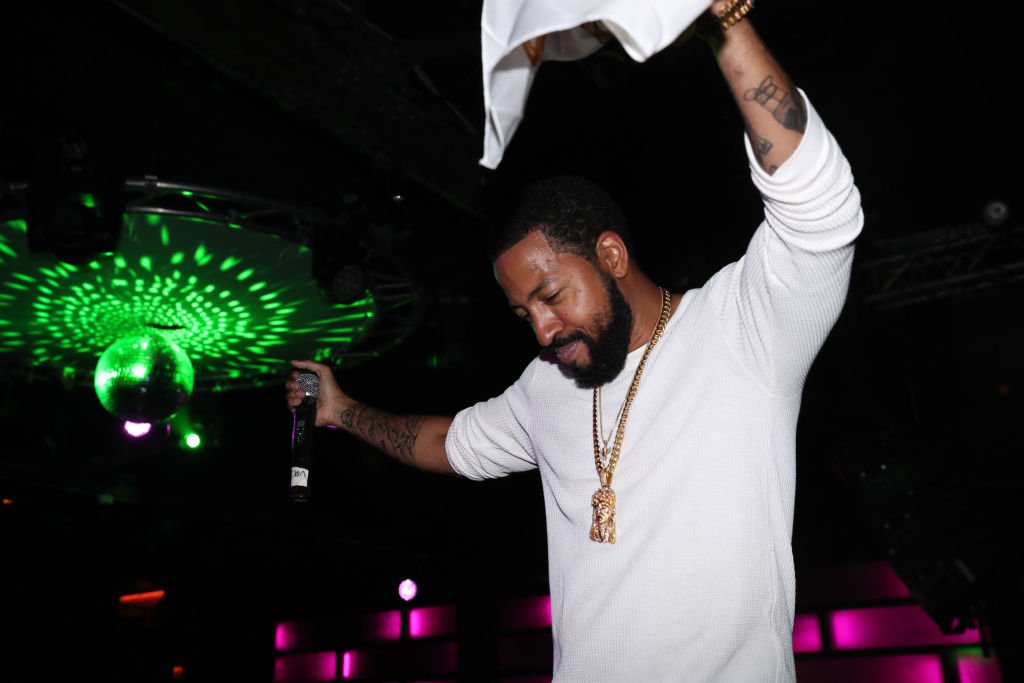

There was a time when what Roc Marciano was doing did not constitute a movement. There was no convenient subgenre name for it, no algorithm feeding listeners endless variations of it and certainly no thriving ecosystem of rappers selling limited vinyl, expensive digital downloads and merch directly to fiercely loyal audiences. There was just Roc.
Today, sparse soul loops, barely-there drums, hushed threats, dense rhyme schemes, designer references and cinematic street writing are embedded in modern underground rap. You can hear pieces of that language throughout the work of Griselda and its extended universe, in Nicholas Craven’s production, in Ransom’s career resurgence, and across a wider network of artists who have built devoted audiences without requiring mainstream radio or major-label machinery.
Roc Marciano did not invent underground hip-hop. He did not invent mafioso rap, sampling, rapping without drums or rhyming about expensive things while describing inexpensive ways to die. Kool G Rap, Rakim, Raekwon, Ghostface Killah, Mobb Deep, RZA, EPMD, Pete Rock, Kool Keith and plenty of other architects laid bricks before him.
What Roc did was inherit that tradition, strip parts of it down to their essence and rebuild it for another era. In doing so, he helped establish a language that an entire generation of underground artists would eventually speak.
That is why calling Roc Marciano influential no longer feels sufficient. There is a better word for it.
Before The Blueprint
Roc Marciano’s story did not begin with Marcberg. Raised in Hempstead, Long Island, he comes from a region whose fingerprints are all over hip-hop history. Rakim, EPMD, Public Enemy and De La Soul were among the acts that made Long Island a source of innovation rather than merely another New York rap outpost.
Roc has been explicit about how deeply that lineage shaped him. When Complex asked him to identify his favorite albums in 2012, he called Rakim the reason he raps and described the appeal in terms that sound almost prophetic now: elite lyricism paired with Dapper Dan, luxury cars and the aura of a “smooth cold killer.” He similarly praised Only Built 4 Cuban Linx…, Mobb Deep’s The Infamous, Nas, Kool G Rap, EPMD and other records that created complete street worlds rather than collections of disconnected songs.
Before he became the patron saint of grimy independence, Roc also experienced the traditional music business. Busta Rhymes brought him into the industry through Flipmode Squad around the turn of the millennium. Roc has always credited Busta for giving him an early platform, from radio exposure to high-profile performances. He would later form The U.N., whose 2004 album U.N. or U Out featured production from respected names including Pete Rock and Large Professor alongside Roc himself. Those years were crucial, but they also helped show Roc what he did not want.
He had already been producing his own material before joining Flipmode. Once surrounded by world-class producers, however, it made sense to focus on rhyming. Years later he realized the flaw in that arrangement: other people could give him great beats, but they could not necessarily give him his beats.
“I need me on the beats to get the best outta me,” he told MERRY JANE in 2018. By the time he began assembling his first solo album, Roc decided to produce the entire project himself. He described that return to total creative control as embracing “the auteur thing.” That decision changed underground Rap.
“I Came With A Sound”
When Marcberg arrived in 2010, rap’s commercial center was moving in almost every direction except Roc Marciano’s. Pop crossover was becoming increasingly central to major-label rap. Southern production and trap were ascendant. Records were getting bigger, brighter and more aggressive. Roc went smaller.
The samples felt dusty and obscure. Drums were restrained, and sometimes they disappeared almost completely. The arrangements left uncomfortable amounts of air in them. There were few concessions to radio, and the album moved with the patience of somebody completely uninterested in whether you caught up.
But Marcberg was not minimalist simply for the sake of minimalism. Roc’s production philosophy was directly connected to his ambitions as an MC. “A lot of that heavy production we was doing with the loud drums and big bass lines” obscured what he could do lyrically, Roc later told Complex. He wanted quieter production so listeners could hear his voice more clearly, eventually creating beats specifically suited to his cadence.
Asked years later why he often minimized drums, Roc made the explanation even simpler: “For me as an MC I enjoy the space.” Without drums dictating the groove, he said, he had more room to maneuver vocally. That distinction is critical because conversations about Roc Marciano’s influence often stop at the production. The man can rap his ass off.
His writing is dense without sounding laborious. Internal rhymes pile on top of each other, often landing in strange portions of a bar. Images arrive in rapid succession: tailored clothes, automobiles, food, women, firearms, artwork and street violence can all appear within the same verse without any change in his vocal temperature. His flow can feel conversational even when the rhyme construction underneath it is ridiculously complicated.
That quality has occasionally inspired comparisons to MF DOOM, but Roc himself has identified Kool Keith as the more meaningful influence. He told POW that he became a DOOM fan relatively late and “was already doing what I was doing,” while praising Keith for embracing strange, uncomfortable creative choices.
Busta Rhymes, who has known Roc since his earliest industry years, does not mince words about his ability. He has placed Marciano in his personal top five MCs and called him an “architect with words,” praising the precision of his pen and claiming other accomplished rappers have been reluctant to rhyme beside him.
So while Marcberg is often discussed for what it removed — drums, excess, obvious hooks — its real innovation may have been what all that empty space allowed Roc to put front and center. Himself.
When A Sound Becomes A Movement
Influence gets tricky in hip-hop because similarity does not automatically equal lineage. Not every rapper who uses a soul loop is a Roc Marciano disciple, and not every artist operating in today’s underground owes him a personal debt. Some are peers. Some developed independently. Others share older influences with Roc. But there are connections that are difficult to dispute.
Westside Gunn has acknowledged the landscape Griselda entered. Looking back at those early years, he told GRAMMY.com that the lane they occupied was sparsely populated by artists such as Roc Marciano, Action Bronson and Danny Brown. Gunn has since built Griselda into an unmistakable universe of its own — Buffalo street mythology, wrestling references, fine art, fashion, limited vinyl and a roster of singular MCs — but he recognizes who was standing on that block before the neighborhood got crowded.
Busta Rhymes has gone even further, publicly giving Roc credit while discussing what listeners often call the “Griselda sound.” The point is not that Roc created Westside Gunn, Conway The Machine or Benny The Butcher. It is that the stripped-down, sample-heavy street aesthetic they helped popularize already had one of its clearest modern templates in Marcberg.
Stove God Cooks provides an even more direct connection. Stove had already spent years learning under Busta Rhymes when he crossed paths with Marciano. According to Stove, Roc began sending him production, and something clicked. “When Roc starts sending me beats, I’m like, ‘Okay, I’m starting to feel it again,’” Stove told DJBooth. The relationship eventually produced Reasonable Drought, with Roc handling the entire album’s production.
The result was not a Roc Marciano impersonation. Stove’s delivery is louder, more theatrical and more melodic. His coke-rap punchlines detonate where Roc’s often slide past with a smirk. But that is precisely why Reasonable Drought matters to this argument. Roc’s vision did not require another artist to sound like him. It created enough space for another artist to become more fully himself.
Stove eventually became a recurring presence in the Griselda orbit and, years later, landed on Clipse’s reunion album. The lineage from Busta to Roc to Stove and back into today’s larger street-rap ecosystem reads less like a theory than a family tree.
Nicholas Craven offers another branch. The Montreal producer has said he was growing tired of traditional sample-based boom-bap around 2012 and 2013 when Roc Marciano’s approach changed his perspective. Hearing Roc allow a great sample to loop without necessarily covering it in boom-bap drums “saved” him creatively, Craven said.
Craven then became one of the defining producers of the next underground wave, working with Boldy James, Mach-Hommy, Tha God Fahim and, most notably, Ransom. His run with Ransom helped provide the veteran Jersey City MC with a new sonic environment during one of the strongest stretches of his career.
Roc to Craven to Ransom. That is how influence works when it becomes infrastructure.
Underground Doesn’t Have To Mean Broke
Roc Marciano’s impact would be significant if the story ended with the music. It does not. As streaming reshaped the record business, Roc began treating his intensely loyal audience as an asset rather than a consolation prize. With 2017’s Rosebudd’s Revenge, he sold the album directly from his website before making it widely available. The following year, he took the experiment further with RR2: The Bitter Dose, charging $30 for a digital copy while withholding it from streaming services. The response surprised even him.
“This sh*t is printing money,” Roc told DJBooth at the time, adding that he had recouped his investment within a day. More important than the number was the philosophy behind it. “I’m catering to the people who really rock with me,” he explained. Roc said other artists subsequently contacted him to tell him they were adopting similar approaches.
His longtime manager Jazz Walker later put the strategy in broader terms while speaking with The Company Man. Roc’s camp believed they had not only helped usher in a sound but also a monetization system built around it. Roc obviously did not invent direct-to-consumer music sales, any more than he invented sampling or independent rap. What he demonstrated was how effectively that model could work for the modern underground MC. The equation changed.
Instead of pursuing millions of casual listeners, an independent artist could cultivate a smaller audience willing to spend substantially more for direct access to the work. Music could arrive first as a premium product rather than immediately entering an endless streaming feed. Vinyl could become collectible. Scarcity could become part of presentation. Ownership and margins could matter more than playlist placement Look around underground rap now.
Limited vinyl editions regularly disappear within minutes. Artists bundle records with merch. Projects are sold directly before hitting DSPs. Physical copies command premium prices. Five thousand committed supporters can sometimes be worth more than hundreds of thousands of passive streams.
Roc was thinking about the direct relationship remarkably early. In a 2010 Unkut interview, while Marcberg was still new, he spoke about launching his own website, giving music directly to listeners and selling merchandise to the fans supporting him. The premium model would evolve years later, but the instinct was already there: own the relationship.
Roc’s underground was never supposed to mean unsuccessful. It meant independent.
The Blueprint Never Became A Formula
There is another reason Roc Marciano’s legacy cannot be reduced to Marcberg. His catalog refused to stop there. Reloaded arrived in 2012 and proved the debut was no accident. Then came records including Marci Beaucoup, The Pimpire Strikes Back, Rosebudd’s Revenge, RR2, Behold A Dark Horse, Marcielago, Mt. Marci and Marciology, along with full-length collaborations with DJ Muggs, The Alchemist and DJ Premier. Good luck asking serious Roc Marciano fans to rank his discography.
One listener will insist Reloaded is untouchable. Another will ride for Marcberg. Someone else will put Mt. Marci in the top three, while another considers Marciology, Rosebudd’s Revenge, RR2 or The Elephant Man’s Bones the one. The arguments are less interesting for who wins than for what they reveal: for an artist whose historical influence is so often traced to one 2010 album, Roc’s career never became a one-album story.
Even when he hands the boards to someone else, his universe remains intact. The Elephant Man’s Bones with The Alchemist works because Alchemist understands Roc’s sense of space without simply recreating Marcberg. The Coldest Profession gives DJ Premier another canvas for Roc’s writing. On other projects, Roc reverses the relationship entirely, producing complete records for Stove God Cooks, Flee Lord, Jay Worthy and others. His role has gradually expanded from artist to curator.
CABBAGES recently described that evolution as a move from “cosign to curation,” pointing to the artists Roc has backed and helped frame musically. Errol Holden is the latest example. Roc executive-produced Holden’s Mulberry Silk Road and then made him the lone guest on his own 2026 album 656.
The names change. The production changes. Sometimes the drums return. The sensibility remains recognizable. That is the difference between creating a gimmick and creating a language.
The Godfather Is Still At The Table
The strangest thing about writing a legacy piece about Roc Marciano in 2026 is that it does not feel like writing about somebody whose important work is behind him.
656, released in January, returned Roc to full self-production for the first time since Marci Beaucoup in 2013. Rather than sounding like an exercise in nostalgia, the record subtly alters his minimalism with murkier digital textures and synthetic edges while keeping the writing unmistakably Marci. Pitchfork praised the album for finding “a different shade of minimalism,” while noting that the underground renaissance he helped shepherd is still thriving.
That matters. Sixteen years after Marcberg, Roc is not merely touring behind the blueprint. He is still adding rooms to the house. And he is increasingly comfortable saying so. During a 2026 interview with HOT 97’s Mornings With Mero, Roc questioned why conversations about the movement sometimes omit the person who helped establish its modern vocabulary. “How can I be the godfather of a sound, but y’all not talking about my sound?” he asked. Then he reduced the entire argument to five words. “I came with a sound.” He did.
Roc Marciano inherited the DNA of New York street rap and mutated it for a period when much of the industry had moved elsewhere. He stripped away percussion to create more room for language. He turned luxurious indifference into its own kind of menace. He showed younger producers that a sample did not always need to be attacked with drums. He helped artists find versions of themselves inside that framework. He built a direct-to-consumer model that treated devotion as more valuable than ubiquity.
And then he kept making great records while everybody else caught up. Roc Marciano did not invent underground Rap. He did something arguably harder. He helped reinvent what underground Rap could become. That is why, after all these years, “influential” feels a little too small. The Godfather will do.
