

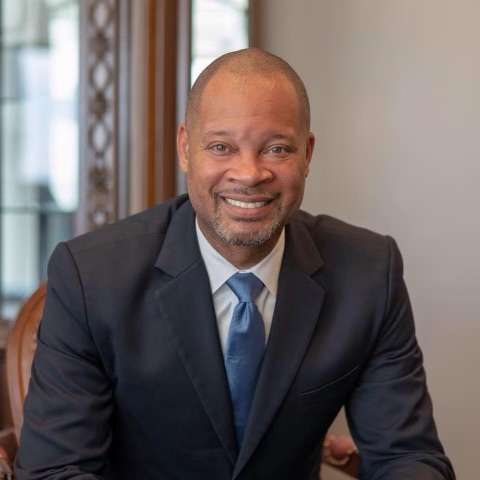
For nearly 250 years, only three Black Americans have been elected governor. This November, eight Black candidates from both major political parties are making history simply by appearing on the ballot.
Throughout American history, Black leaders have broken barriers in Congress, the military, business, education, and even the White House. Yet one of the nation’s most powerful political offices has remained remarkably difficult to reach: state governor.
Of the thousands of Americans who have served as governors, only three Black Americans have ever been elected to the position.
That could change on November 3, 2026.
A record eight Black candidates have secured major-party nominations for governor in eight different states. Five are Democrats and three are Republicans, representing a historic moment in American politics.
The candidates come from different backgrounds, political philosophies, and parts of the country. Some are experienced members of Congress, others have led major cities or served in state government, and one is already a sitting governor.
Their campaigns are not identical, and their political priorities often differ sharply. But together, they represent something that would have been nearly unimaginable during much of America’s history.
For Black Americans, the significance of this moment goes far beyond a single election.
Only Three Black Americans Have Ever Been Elected Governor

To understand why the 2026 election is so significant, it helps to look at the history.
In 1989, Douglas Wilder made history when Virginia voters elected him governor. When he took office in January 1990, he became the first Black American elected to lead a U.S. state.
It was an extraordinary achievement, particularly in Virginia, a state deeply connected to the history of American slavery and segregation.
Seventeen years later, in 2006, Deval Patrick became the second Black American elected governor, winning in Massachusetts. He was reelected in 2010.
Then, in 2022, Wes Moore won Maryland’s gubernatorial election, becoming only the third Black American in U.S. history elected to the office.
That’s it. Three elected Black governors in nearly two and a half centuries.
Two other Black Americans have served as governors without winning a gubernatorial election.
P.B.S. Pinchback became acting governor of Louisiana during Reconstruction in December 1872, serving for 36 days and becoming the first Black person to exercise the powers of a U.S. state governor.
David Paterson became governor of New York in 2008 following the resignation of Eliot Spitzer. He served until 2010.
And despite generations of progress, no Black woman has ever served as governor of a U.S. state.
The 2026 election could change several of those historical records.
Meet the Five Democratic Candidates
Keisha Lance Bottoms — Georgia
Former Atlanta Mayor Keisha Lance Bottoms is seeking to become the first Black woman to serve as governor of any U.S. state.
Bottoms gained national attention during her time leading Atlanta, particularly as the city confronted the COVID-19 pandemic and nationwide protests over racial justice.
Her candidacy follows the historic campaigns of Stacey Abrams, who became Georgia’s Democratic gubernatorial nominee in 2018 and again in 2022.
If elected, Bottoms would make history not only as the first Black woman governor in the United States, but also as Georgia’s first woman governor and first Black governor.
Wes Moore — Maryland
Wes Moore is already part of American political history.
Elected in 2022, Moore became Maryland’s first Black governor and the third Black American ever elected governor of a U.S. state.
Before entering politics, Moore served as an Army officer, became a Rhodes Scholar, authored bestselling books, and led a major nonprofit organization.
Now seeking a second term, Moore is the only Black sitting governor in the country.
His reelection campaign comes at a time when several other Black candidates are seeking to join him in governors’ offices across the nation.
Aaron Ford — Nevada
Nevada Attorney General Aaron Ford is seeking to become the first Black governor in his state’s history.
Ford has served as Nevada’s attorney general since 2019 and previously held leadership positions in the state Senate.
His campaign pits him against incumbent Republican Governor Joe Lombardo.
A Ford victory would also mark another geographic milestone: the election of the first Black governor of a U.S. state west of the Mississippi River.
David Crowley — Wisconsin
David Crowley has already made history in Wisconsin.
In 2020, he became the first Black person elected Milwaukee County executive, taking responsibility for a county with hundreds of thousands of residents.
Before that, he served in the Wisconsin State Assembly.
Crowley is now seeking the governorship in an open-seat election, with the opportunity to become Wisconsin’s first Black governor.
His campaign also highlights a familiar path into statewide leadership: beginning in local government and building experience through public service.
Jermaine Johnson — South Carolina
South Carolina State Representative Jermaine Johnson is carrying the Democratic nomination in a state with one of the most consequential histories in the struggle for Black political representation.
South Carolina was the first state to secede from the Union before the Civil War. During Reconstruction, Black legislators played important roles in rebuilding its government, only to face widespread disenfranchisement and segregation in the decades that followed.
Johnson’s candidacy is another chapter in that long history.
If elected, he would become South Carolina’s first Black governor.
Meet the Three Republican Candidates
The historic field is not limited to Democrats.
Three Black Republicans have also secured major-party gubernatorial nominations, demonstrating the ideological diversity among Black political leaders.
Every Black American elected governor so far has been a Democrat. The 2026 election creates the possibility of that distinction changing.
Byron Donalds — Florida
U.S. Representative Byron Donalds is the Republican nominee for governor of Florida.
Donalds has represented southwest Florida in Congress since 2021 and has become a prominent Republican voice on national economic and political issues.
His campaign focuses on Republican priorities such as taxes, economic growth, public safety, and education.
If elected, Donalds would become Florida’s first Black governor and the nation’s first Black Republican elected governor.
John James — Michigan
John James has built his career around military service, business, and politics.
A graduate of the United States Military Academy at West Point, James served as an Army helicopter pilot before entering the business world.
He later ran for the U.S. Senate and was elected to Congress in 2022.
Now, James is seeking to become Michigan’s first Black governor.
His campaign brings another prominent Black Republican into a statewide contest in a politically competitive Midwestern state.
Lisa Demuth — Minnesota
Lisa Demuth, the Republican nominee in Minnesota, is seeking to make history in more than one way.
Demuth, who serves as speaker of the Minnesota House, previously became the first Black person to hold that leadership position.
She is running against Democratic nominee Amy Klobuchar in a historic gubernatorial contest.
Minnesota has never elected a woman governor, and this election marks the first time both major-party nominees for governor are women.
If elected, Demuth would become the first Black woman governor in American history, the first woman governor of Minnesota, and the first elected Black Republican governor in the United States.
Why Has It Taken So Long?
The fact that only three Black Americans have been elected governor is not simply an interesting statistic.
It reflects a much larger story about access to political power in the United States.
For much of the nation’s history, Black Americans were enslaved, denied citizenship rights, or prevented from participating fully in elections.
Even after the Civil War, when the 15th Amendment prohibited denying voting rights based on race, discriminatory laws and practices restricted Black political participation for generations.
Poll taxes, literacy tests, intimidation, violence, and other barriers prevented countless Black Americans from voting or competing fairly for public office.
The Voting Rights Act of 1965 helped dismantle many of those restrictions, although disputes over voting access and representation continue today.
Another challenge has been the political pathway to statewide office.
Black politicians have achieved significant success in congressional districts and major cities. Winning a statewide election, however, requires building a broad coalition across urban, suburban, and rural communities, often in states where Black candidates have historically faced additional obstacles.
Governors’ races can also demand extensive fundraising, statewide political organizations, and years of public visibility.
The 2026 field illustrates how more Black candidates have gained experience in the positions that traditionally serve as stepping stones to the governorship.
Among this year’s nominees are a former major-city mayor, a sitting governor, a state attorney general, a county executive, state legislators, and members of Congress.
Their careers reflect the expansion of Black political representation across different levels of government.
Why the Governor’s Office Matters

Governors hold enormous influence over the daily lives of millions of Americans.
They oversee state budgets, sign or veto legislation, make important appointments, shape education and healthcare priorities, and direct state responses to emergencies.
They can influence policies involving public schools, housing, transportation, economic development, criminal justice, and access to healthcare.
For that reason, representation in governors’ offices matters in ways that extend beyond symbolism.
But representation does not mean that every Black elected official shares the same political positions.
The eight candidates in 2026 disagree on many major issues. Their differences reflect the broader diversity of political views among Black Americans.
Ultimately, voters will evaluate their policies, qualifications, leadership, and plans for their states.
The historic milestone is not that these candidates agree with one another. It is that eight Black Americans representing both major parties have reached the general election for governor in the same year.
A Historic Opportunity for Black Women

Perhaps the most significant potential first in this election concerns Black women.
No Black woman has ever served as governor of a U.S. state.
In 2018, Stacey Abrams became the first Black woman to secure a major-party nomination for governor in the United States, helping bring greater national attention to this long-standing barrier.
Now, Keisha Lance Bottoms in Georgia and Lisa Demuth in Minnesota are pursuing the office from opposite sides of the political spectrum.
Their campaigns demonstrate that Black women are competing for executive leadership positions at the highest levels of state government.
Whatever the election results, their nominations are part of a larger history of Black women seeking political representation and leadership.
What Happens on November 3?

On Election Day, voters in Georgia, Maryland, Nevada, Wisconsin, South Carolina, Florida, Michigan, and Minnesota will decide these eight gubernatorial contests.
Some nominees are challenging incumbents. Others are competing for open seats. Wes Moore is seeking reelection to an office he already holds.
The outcomes remain uncertain.
But the historical significance of the field is already established.
For the first time, eight Black major-party candidates are appearing on gubernatorial ballots in a single election cycle.
Regardless of which candidates win, that represents a remarkable departure from the political landscape of previous generations.
A Milestone Worth Recognizing

American history is filled with examples of Black Americans overcoming barriers that once seemed impossible to break.
From the end of slavery to the expansion of voting rights, from the election of the first Black members of Congress to the election of the nation’s first Black president, political representation has changed dramatically over time.
The governorship has remained one of the most difficult barriers.
For nearly 250 years, only three Black Americans have been elected to lead a state.
In 2026, eight Black candidates are asking voters to give them that responsibility.
Some may win. Others may fall short. But their presence on the ballot reflects how far access to political leadership has expanded, even as important barriers remain.
At Black Excellence, we believe these moments deserve to be documented, remembered, and understood.
Because Black history is not only about what happened generations ago.
It is also being written today.
