

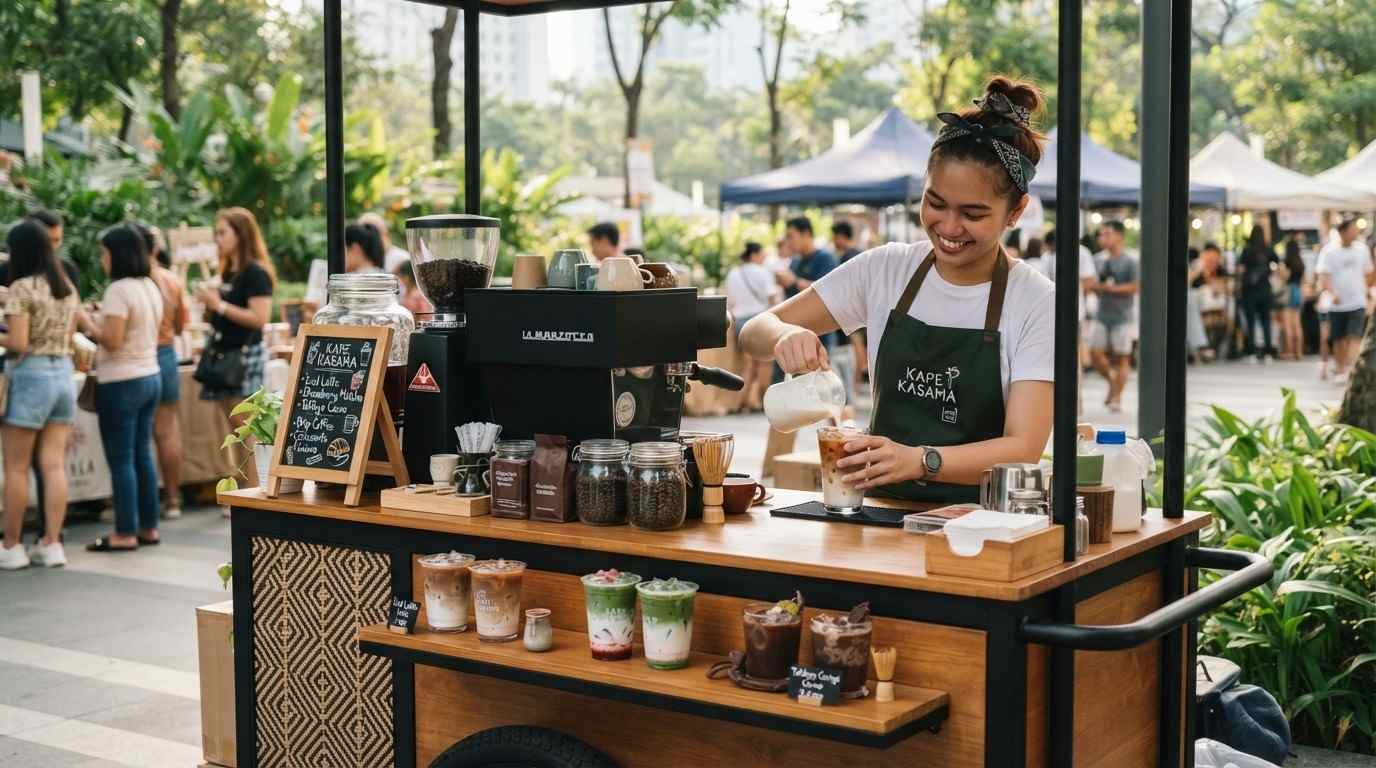
The coffee industry in the Philippines continues to attract entrepreneurs, from established café owners to individuals looking for affordable small-business opportunities. While traditional coffee shops require significant investments in rent, interior design, furniture, utilities, and staff, a mobile specialty coffee cart offers another way to enter the growing beverage market.
A mobile specialty coffee business brings premium coffee and handcrafted beverages directly to customers. Instead of waiting for customers to visit a permanent location, entrepreneurs can set up their carts at weekend markets, office districts, community events, food bazaars, private gatherings, and other high-traffic locations.
What makes this business particularly interesting is its flexibility. Entrepreneurs can start with a relatively compact setup, experiment with different locations, and gradually expand their menu and equipment as demand increases.
For aspiring Filipino entrepreneurs, a mobile coffee cart can be an opportunity to build a recognizable beverage brand without immediately committing to the expenses of operating a full-sized café.
1. What Is a Mobile Specialty Coffee and Artisanal Cart Business?
A mobile specialty coffee cart is a compact beverage business designed to serve freshly prepared drinks in different locations. Depending on the equipment and business concept, it can offer espresso-based beverages, specialty matcha drinks, locally sourced cacao beverages, and other handcrafted refreshments.
Unlike traditional coffee shops, mobile carts are designed to be flexible. Some operate from wheeled carts that can be transported using a vehicle, while others use customized kiosks, portable counters, or small mobile trailers.
The business can focus on one specialty or combine several beverage categories. For example, an entrepreneur might build a brand around premium iced coffee and matcha, while another might highlight Filipino cacao and locally inspired chocolate drinks.
The goal is to offer customers a convenient but memorable beverage experience wherever they are.
2. Why Consider This Business in the Philippines?
Filipinos have a strong appreciation for coffee, and specialty beverages have become an interesting option for consumers who want something beyond ordinary instant coffee. Younger customers, office employees, students, and weekend market visitors are potential customers for a well-positioned mobile beverage business.
Here are several reasons why this business concept deserves consideration:
- Lower overhead than a traditional café: A mobile setup can reduce expenses associated with commercial rent, renovations, and permanent store facilities.
- Flexible selling locations: Entrepreneurs can explore different markets, office areas, private events, and community gatherings.
- Multiple product options: Coffee, matcha, chocolate, and local cacao drinks allow businesses to serve different customer preferences.
- Scalable operations: Owners can start with a basic setup and invest in better equipment as sales grow.
- Branding opportunities: An attractive cart, distinctive cups, and creative drink presentations can help attract customers and generate social media exposure.
However, success is not automatic. Location, product quality, pricing, customer service, and cost management will determine whether the business can generate sustainable profits.
3. What Products Can You Sell?
One advantage of a mobile specialty beverage business is the ability to create a focused menu. You do not need dozens of products when starting. A small selection of well-prepared drinks can make inventory management easier and help maintain consistent quality.
Consider these popular beverage categories:
Specialty Coffee
Coffee can be the main attraction of your cart. You can offer espresso-based beverages and iced coffee variations that appeal to customers looking for café-quality drinks.
- Iced Americano
- Iced Latte
- Spanish Latte
- Caramel Macchiato
- Vanilla Latte
- Cold Brew Coffee
You can also introduce signature drinks using locally available ingredients, such as muscovado sugar, coconut milk, or locally sourced coffee beans.
Artisanal Matcha Drinks
Matcha is another beverage category worth exploring. Its distinctive flavor, green appearance, and versatility make it suitable for creative drink combinations.
- Iced Matcha Latte
- Strawberry Matcha Latte
- Vanilla Matcha
- Coconut Matcha
- Dirty Matcha with Espresso
Quality matters when selling matcha. Choose ingredients that deliver a consistent taste and appearance rather than competing solely on price.
Local Cacao and Chocolate Beverages
The Philippines has a long history of cacao production, making locally inspired chocolate drinks an interesting way to differentiate your business.
Consider offering drinks made with Philippine tablea, cacao powder, or locally sourced chocolate ingredients.
- Traditional Filipino Hot Chocolate
- Iced Cacao Latte
- Dark Chocolate Espresso
- Tablea Milk Drink
- Cacao Mocha
Highlighting Filipino cacao can also help establish a brand identity built around local ingredients and products.
4. How Much Capital Do You Need?
The startup capital depends on the type of cart, equipment, location, and menu. A basic beverage cart will require a smaller investment than a professional espresso setup with commercial-grade equipment.
For planning purposes, here is an illustrative startup budget for a small mobile coffee business in the Philippines:
| Startup Requirement | Estimated Cost |
|---|---|
| Customized mobile cart or kiosk | ₱15,000–₱35,000 |
| Espresso machine | ₱20,000–₱50,000 |
| Coffee grinder | ₱5,000–₱12,000 |
| Milk pitcher, scales, and barista tools | ₱2,000–₱5,000 |
| Blender and beverage preparation tools | ₱2,000–₱5,000 |
| Cooler or small refrigerator | ₱3,000–₱8,000 |
| Initial coffee beans, matcha, cacao, milk, and syrups | ₱5,000–₱10,000 |
| Cups, lids, straws, and packaging | ₱2,000–₱4,000 |
| Branding, signage, and menu boards | ₱2,000–₱5,000 |
| Initial permits and miscellaneous expenses | ₱3,000–₱8,000 |
Estimated total startup capital: ₱59,000–₱142,000.
These figures are preliminary planning estimates, not supplier quotations. Actual costs will vary depending on equipment specifications, whether items are new or secondhand, cart customization, and local permit requirements.
Entrepreneurs with limited capital can start with a simpler menu featuring manual coffee brewing, cold brew, matcha, and cacao drinks. This approach can reduce initial equipment expenses while allowing the business to test customer demand.
It is also important to maintain additional working capital for ingredients, transportation, event fees, utilities, and unexpected expenses during the first few months.
5. Where Should You Set Up Your Mobile Coffee Cart?
Location is one of the most important factors in this business. Since you do not depend on a permanent storefront, you can explore different locations and identify where your products attract the most customers.
Here are some possible locations to consider:
Office Districts and Business Centers
Office employees are potential customers, particularly during morning hours, lunch breaks, and afternoon coffee breaks. You can coordinate with building administrators or property managers to secure permission to operate in designated areas.
Weekend Markets and Food Bazaars
Weekend markets provide an opportunity to introduce your products to different customers. These locations are also useful for testing new flavors, collecting feedback, and building brand awareness.
School and University Areas
Students and faculty members may be interested in affordable coffee, chocolate, and matcha beverages. However, entrepreneurs should secure permission before operating near or inside school properties and consider the spending capacity of their target market.
Private Events and Celebrations
Mobile coffee carts can also provide beverage services for birthdays, weddings, corporate gatherings, product launches, and other private events.
Instead of depending entirely on walk-in customers, you can offer event packages with a fixed number of drinks or a customized beverage menu.
Tourist Destinations and Community Events
Areas with regular tourist activity, local festivals, and community gatherings can provide opportunities for mobile beverage vendors. Research seasonal demand and coordinate with event organizers before committing to a location.
6. How Much Should You Charge for Each Drink?
Pricing should consider ingredient costs, packaging, labor, transportation, location fees, electricity, and other operating expenses. Avoid setting prices based only on what nearby coffee shops charge.
Here are sample retail prices you can use as an initial reference:
| Product | Sample Selling Price |
|---|---|
| Iced Americano | ₱80–₱110 |
| Iced Latte | ₱100–₱140 |
| Spanish Latte | ₱110–₱150 |
| Caramel Macchiato | ₱120–₱160 |
| Iced Matcha Latte | ₱120–₱160 |
| Strawberry Matcha | ₱140–₱180 |
| Iced Cacao Latte | ₱100–₱150 |
| Filipino Tablea Chocolate | ₱90–₱140 |
These are suggested example prices, not verified national market averages. Adjust them according to your ingredient costs, serving size, customer segment, and location.
For example, a premium matcha drink may command a higher selling price because of its ingredient cost. Meanwhile, an iced Americano can serve as a more affordable option for customers who want a simple coffee beverage.
A practical approach is to calculate the cost per serving before finalizing your menu prices. Include the coffee or matcha, milk, sweeteners, cup, lid, straw, and other consumables. Then add an appropriate allowance for labor and overhead.
7. Example of Potential Daily Sales
To understand the business potential, consider a simple sales scenario.
Suppose your mobile coffee cart sells an average of 50 drinks per day at an average selling price of ₱120 each.
| Sales Information | Amount |
|---|---|
| Drinks sold daily | 50 cups |
| Average selling price | ₱120 |
| Daily gross sales | ₱6,000 |
| Estimated monthly operating days | 26 days |
| Illustrative monthly gross sales | ₱156,000 |
Remember that gross sales are not the same as profit.
You still need to deduct the cost of ingredients, packaging, employee salaries, transportation, electricity, event rental fees, equipment maintenance, marketing, taxes, and other operating expenses.
For example, if your average direct ingredient and packaging cost is ₱45 per drink, selling 50 drinks generates ₱3,750 in daily sales after those direct product costs.
That amount must still cover your remaining operating expenses. Actual profitability will depend on your sales volume, product margins, and business efficiency.
8. Equipment and Supplies You Need
The equipment you purchase should match your menu and business model. Avoid spending too much on expensive machines before establishing consistent demand.
For a specialty coffee cart, consider the following:
- Espresso machine: Used to prepare espresso shots for lattes, cappuccinos, and other espresso-based drinks.
- Coffee grinder: Helps produce freshly ground coffee for consistent extraction.
- Milk pitchers: Needed for preparing and steaming milk.
- Digital weighing scale: Helps maintain consistent coffee and beverage measurements.
- Water supply: A reliable source of potable water is essential for beverage preparation and cleaning.
- Refrigeration or cooler: Keeps milk and other temperature-sensitive ingredients properly stored.
- Blender or shaker: Useful for preparing specialty iced beverages and blended drinks.
- Power supply: Ensure your electrical setup can safely support your machines and other equipment.
- POS system: Helps record sales, monitor transactions, and manage daily business performance.
For mobile operations, portability and reliable power are important considerations. Before buying equipment, check its dimensions, power requirements, water requirements, and suitability for transportation.
9. Business Permits and Legal Requirements
Operating a mobile food and beverage business in the Philippines requires proper registration and compliance with applicable local regulations.
Depending on your business structure and location, you may need to consider the following:
- DTI registration: For individuals registering a business name as a sole proprietor.
- SEC registration: For entrepreneurs establishing a corporation or partnership, as applicable.
- Barangay clearance: Subject to the requirements of the local government unit.
- Mayor’s or business permit: Required according to applicable local business regulations.
- BIR registration: For tax registration, official invoicing, and applicable tax compliance.
- Sanitary permit: Check the local health office requirements for food and beverage operations.
- Health certificates: Food handlers may need health certificates or other documentation required by the local government.
Mobile vendors may also need additional permissions from property administrators, market organizers, event organizers, or local authorities before operating in a particular location.
Requirements can vary depending on the municipality or city and the actual nature of the operation. Contact your local Business Permits and Licensing Office (BPLO) and health office to confirm the applicable requirements before launching.
10. How to Market Your Mobile Coffee Business
A good product needs effective marketing. Fortunately, mobile coffee carts have several opportunities to attract customers through visual branding and social media.
Here are practical marketing strategies to consider:
Create an Attractive Brand Identity
Choose a memorable business name, recognizable logo, and consistent color scheme. Your cart should look clean, professional, and inviting.
Use Facebook, Instagram, and TikTok
Post photos and short videos showing your drinks, preparation process, daily locations, and special promotions. Short videos of espresso extraction, matcha preparation, and chocolate pouring can help generate interest.
Publish Your Daily Location
Since your cart moves between different locations, regularly announce where customers can find you. A weekly location schedule can help followers plan their visits.
Offer Opening Promotions
Consider introductory discounts, limited-time signature drinks, or bundle offers. These promotions can encourage first-time customers to try your products.
Build Partnerships
Connect with event organizers, office administrators, local businesses, and community groups. These partnerships can help you secure selling locations and private event bookings.
Introduce a Loyalty Program
A simple loyalty card can encourage repeat purchases. For example, customers who purchase a certain number of drinks can receive one complimentary beverage.
11. Challenges You Should Prepare For
Although a mobile coffee cart requires less infrastructure than a traditional café, it still comes with operational challenges.
- Unpredictable customer traffic: Some locations may generate strong sales while others may have limited demand.
- Weather conditions: Heavy rain and extreme heat can affect outdoor operations.
- Ingredient management: Milk, coffee beans, matcha, and other ingredients require proper storage and inventory control.
- Equipment maintenance: Espresso machines and grinders need regular cleaning and servicing.
- Competition: Established cafés and other beverage sellers may offer similar products.
- Location restrictions: Not all public spaces allow mobile vending, so securing permission is essential.
- Power and transportation: Moving equipment and maintaining a reliable power supply can increase operating expenses.
One way to manage these challenges is to start with a small menu and a manageable operating schedule. Track your sales by location and identify which products generate the best margins.
12. Tips for Starting Small and Expanding Gradually
You do not need to build an elaborate coffee cart immediately. In fact, starting small can help reduce financial risk while you learn how customers respond to your products.
Here are some practical steps:
- Choose a specific target market. Decide whether you want to serve office employees, students, weekend shoppers, event guests, or tourists.
- Develop a focused menu. Start with five to eight beverages that are easy to prepare consistently.
- Research potential locations. Visit weekend markets, office areas, and community events to understand customer traffic and competition.
- Calculate your startup costs. Prepare a realistic budget covering equipment, permits, inventory, transportation, and working capital.
- Test your products. Ask potential customers to sample your beverages and provide honest feedback.
- Monitor daily sales. Record the number of drinks sold, ingredient consumption, and operating expenses.
- Reinvest carefully. Upgrade equipment, expand the menu, or add another cart only when the business can support the investment.
Once your first cart becomes profitable and your operations are more organized, you can explore additional locations, catering packages, or a second mobile unit.
A mobile specialty coffee and artisanal cart business offers an alternative way for Filipino entrepreneurs to enter the beverage industry without immediately investing in a traditional coffee shop.
By bringing specialty coffee, matcha, and locally inspired cacao drinks directly to customers, entrepreneurs can explore different markets, build relationships with communities, and develop a distinctive beverage brand.
The business also offers flexibility. You can begin with a compact cart, a limited menu, and a carefully selected location before gradually expanding your operations.
However, the key to long-term success is not simply selling expensive coffee. It is understanding your customers, maintaining product quality, controlling operating expenses, and choosing locations where demand is strong enough to support your business.
For aspiring entrepreneurs looking for a manageable food and beverage business, a mobile specialty coffee cart may be worth exploring. With proper planning, consistent service, and a recognizable brand, a small coffee cart could eventually grow into a larger mobile beverage business.

Business News Philippines was launched in October 2015 as a portal for readers to learn more about operating a business in the Philippines.
