

The newly leaked Memo of Understanding to end the conflict makes it clear that the president has nothing to show for his expensive, destructive fool’s errand.
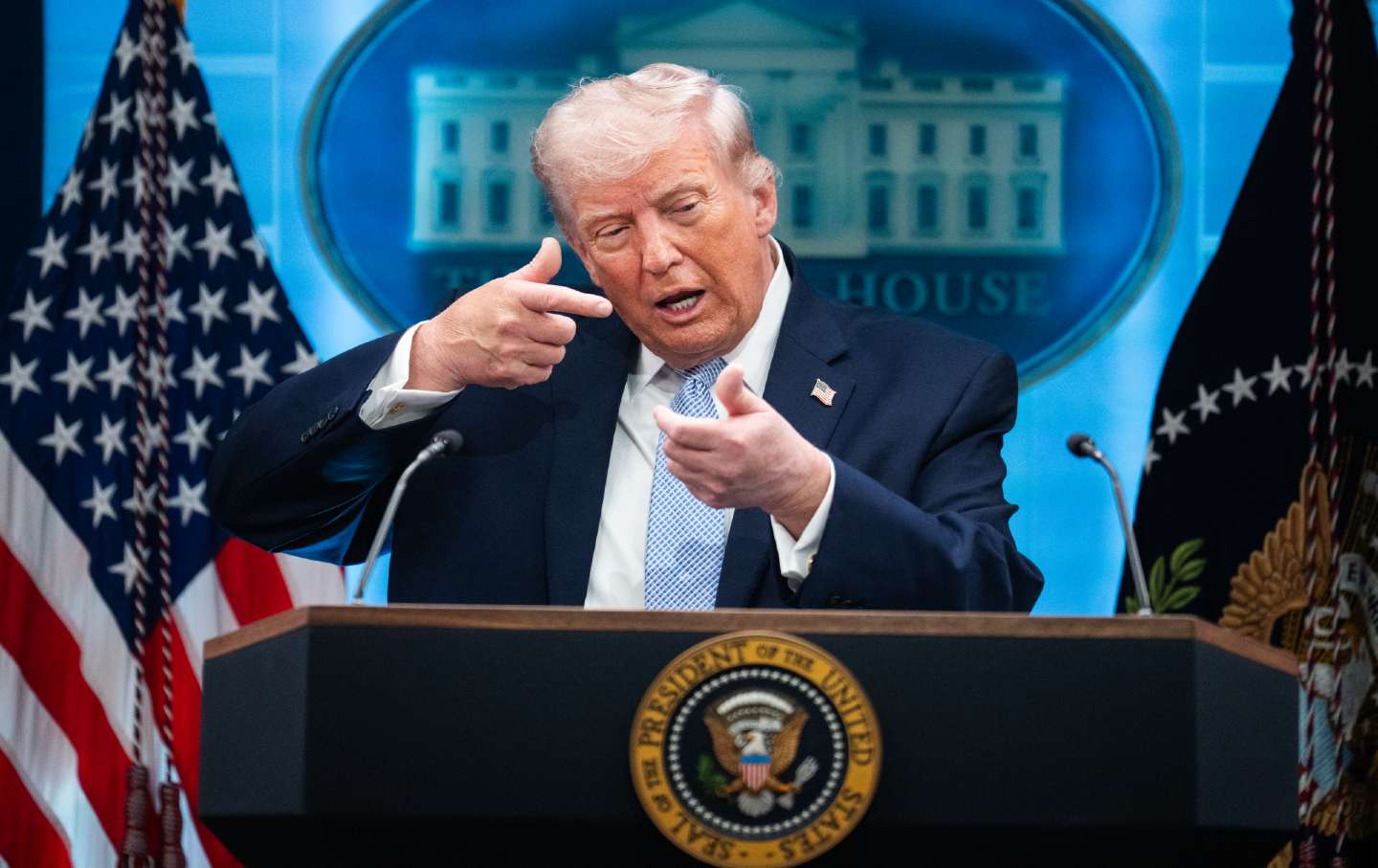
President Donald Trump mimics gunfire during an April press conference on the Iran War.
(Tom Williams / CQ-Roll Call, Inc via Getty Images)
Over the weekend, with the White House transformed by the bizarre and hastily constructed UFC fight arena erected to honor both the birthday of the nation and President Donald Trump, our commander in chief began crowing about the incredible deal he had just worked out with Iran. But despite repeatedly promising to release the full text of the Memorandum of Understanding he’d endorsed—a document that supplies a temporary framework for how to negotiate the real issues at play in a more durable peace agreement—the president continued to hem and haw on the details.
On Wednesday, CNN obtained a copy of the memo. And the text of the provisional deal makes it clear why the president didn’t want this document to spend too much time out in the world before he tries to memory-hole the war entirely on Friday. It represents a humiliating strategic defeat and immediately ends the Islamic Republic’s long international isolation with virtually no concessions from Tehran whatsoever. It is an epochal surrender, and it will cause such a deafening roar from the GOP’s permanent-war wing that Trump will be forced to spend the weeks and months ahead enduring pressure to walk away.
Beltway-based Iran hawks and some Republican elected officials had spent the first part of this week clamoring for the text of the memorandum. They were perhaps hoping against hope that MAGA’s bellicose emperor wouldn’t negotiate a framework that was as bad as it sounded in the initial reports. “Will the administration lose at the negotiating table what was won on the battlefield?” asked Mark Dubowitz of the ultra-hawkish Foundation for the Defense of Democracies (FDD). Unfortunately for Dubowitz and his friends, the memo was even worse than they feared. While Iran agreed to hold talks about its nuclear program, the United States was unable to extract a single concrete pledge about the shape of a deal beyond a promise not to build nuclear weapons. (What’s more, that pledge is entirely redundant, given that Iran is already a signatory to the Non-Proliferation Treaty.) The memo only notes in passing that issues like Tehran’s existing stockpile of highly enriched uranium and plans for future enrichment “will be adequately addressed in a final agreement.”
While US officials failed to broker any serious linkage between Iran’s nuclear program and aid resumption, Tehran achieved a linkage breakthrough of its own: Iranian negotiators tied the negotiating window to stopping Israel’s reckless bombing attacks in Lebanon. The memo calls for an “immediate and permanent end to the war on all fronts, including Lebanon”—a shocking coup for the Iranians that is now likely triggering a series of nervous breakdowns within DC’s cottage industry of hawkish think tanks. The document also includes no mention of Hezbollah, Iran’s other regional proxies, or the country’s ballistic missile program. This latter omission would seem to leave the Iranian Revolutionary Guard Corps free to fine-tune its ballistic missile arsenal at its leisure for as long as it takes to negotiate a binding agreement.
The memorandum also appears to immediately dismantle, or at least suspend, the existing US sanctions regime. It says that “immediately after the signing of this Memorandum of Understanding” the Treasury Department will issue waivers for Iran’s oil and petrochemical industries, as well as for “all related services, including banking, insurance, transportation, and the like.” It further promises that “frozen or restricted funds and assets of the Islamic Republic of Iran will be released and made fully available” before any comprehensive settlement is signed. The lack of any language pertaining to Iran’s rumored plans to install a permanent toll for commercial ships passing through the Strait of Hormuz is a de facto surrender to the country’s plan to charge “service fees” notionally akin to a maritime credit-card processing charge.
There is no way to describe this memorandum other than as the ratification of America’s most significant strategic defeat since Vietnam. Iran has managed to register this astonishing victory in less than four months. The document calls for a final agreement to be reached in a “maximum” of 60 days but also says that period can be “extendable by mutual consent.” As has been obvious for weeks now, Trump was trying to push the most difficult issues beyond the US midterm elections, effectively walking away from the occasionless, pointless war that he started. Trump would be falling back on his standard MO: declare himself a winner in a completely self-engineered defeat, and leave it to others to sort through the fallout.
Current Issue
The chances that the president, having inked this humiliating document, will decide to restart a brutally unpopular war that was destroying the GOP’s odds of holding the House and Senate are slim to none—at least not before November. As the president himself said on Wednesday, “The alternative to this deal was a global recession…. The Strait of Hormuz would never have been opened.” That political reality grants Iran’s battle-hardened, hard-line new leaders virtually carte blanche to do whatever they want for the foreseeable future.
This is an outcome that is also nothing short of a long-overdue Waterloo for America’s decades-long project to topple the Iranian theocracy or force it to its knees. Once Iran succeeded in keeping the Strait of Hormuz closed with minimal effort, and once the US gave up on any attempt to force it open with history’s most powerful navy, Tehran realized it held all the cards, to use Trump’s favorite phrase. The country’s massive new leverage was sufficient not just to secure the regime’s bare survival but also to achieve the kind of breakout in regional power that the late Ayatollah Khamenei could only have dreamed of. Iran has even brought Israel to heel—or at least established a deterrent sufficient to prevent Jerusalem from bombing the country at will without consequences. Shielded from military reprisals and with a promise from the United States to “respect each other’s sovereignty and territorial integrity, and to refrain from interfering in each other’s internal affairs,” Iran is now well on the road to regional hegemony.
That disaster is the unambiguous takeaway from Trump’s impulsive decision to murder Iran’s leadership on February 28 and launch air strikes that, as virtually every aerial bombardment expert on Earth warned, had no chance of dislodging the regime. Yet for the doyens of the Iran Hawkery Industrial Complex, war against Iran can’t fail—it can only be failed. The New York Times’ Bret Stephens wrote that America didn’t lose “because the war, for all its costs or errors of execution, was a mistake” but rather “because this pretense of a peace is an act of geopolitical self-harm that will haunt our standing in the world for years to come.” Meanwhile, FDD’s Clifford May wrote that “Iran’s rulers need to believe that [Trump] will resume both the naval blockade and military operations if the coming talks are unproductive.”
Cliff, buddy, no one on the planet believes that if this agreement indeed goes into effect Trump will resume the naval blockade or begin bombing Iran again as the midterm elections inch closer and closer. Neither Stephens, May, nor anyone else in the DC armchair-combat brigade can bear to admit that America lost the war as well as the peace and in the process exposed potentially fatal weaknesses in US global security strategy.
At best, Iran proved that the mighty American military juggernaut is deeply susceptible to economic and political pressure. Even US intelligence assesses that Iran will be able to close the Strait of Hormuz whenever it pleases—granting it the economic equivalent of a nuclear weapon that can actually be used. And at worst, Trump’s arrogant, impulsive blunder unwittingly destroyed the basis of American global power by making it clear how vulnerable US bases are to missile and drone fire. That not only means that other countries will be more reluctant to host them—a political problem—but also that they are useless in an actual war against a determined, well-equipped adversary like China.
This is an outcome that is un-spinnable for President Trump. He now can only be desperately hoping that the economic rebound from opening the Strait of Hormuz will make up for the unmistakable stench of failure and ineptitude that is now wafting from the White House. He is certainly skilled enough in the art of changing the subject to make that a plausible path to keeping Republican losses in November tolerable. However, he has also ripped open a fissure in the GOP, pitting Vice President JD Vance and his isolationist allies against the party’s still-powerful national-security hard-liners, heading into a critical election cycle with loud and angry pro-Israel hawks particularly aggrieved. He’ll now have to live with the reality that, for all of the horrific, long-term damage he has inflicted on the United States and its political system, the debacle in Iran may be the humiliating foundation of his legacy.
With the midterm elections now firmly upon us, the question is whether Democratic candidates will do more than merely occupy ballot lines as mild alternatives to the red-hot crisis that is Donald Trump.
As Trump spends over $1 billion a day on a globally destabilizing war on Iran and admits that he doesn’t “think about Americans’ financial situation,” millions across the country are struggling with the surging costs of essentials. Democrats must seize this moment and advance bold, small-“d” populist ideas—not settle for cynical caution that once again snatches defeat from the jaws of victory.
The Nation elevates progressive ideas, movements, and elected officials achieving real change across the country into the national conversation. At the same time, our journalists are exposing how crypto and AI-funded super PACs are spending hundreds of millions of dollars to knock out candidates they oppose, reporting on the devastating impact of the Supreme Court’s evisceration of the Voting Rights Act, and sounding the alarm on attempts by red states to quickly redraw electoral maps, disenfranchising Southern Black voters.
We can play this critical role because of support from readers like you. This June, we’re raising $20,000 to power The Nation’s independent journalism in the run-up to November’s immensely consequential elections.
It’s in our power to build a more just society, and your support at this critical moment brings us closer to that bold vision. I hope you’ll donate today.
Onward,
Katrina vanden Heuvel
Editor and Publisher, The Nation
More from The Nation
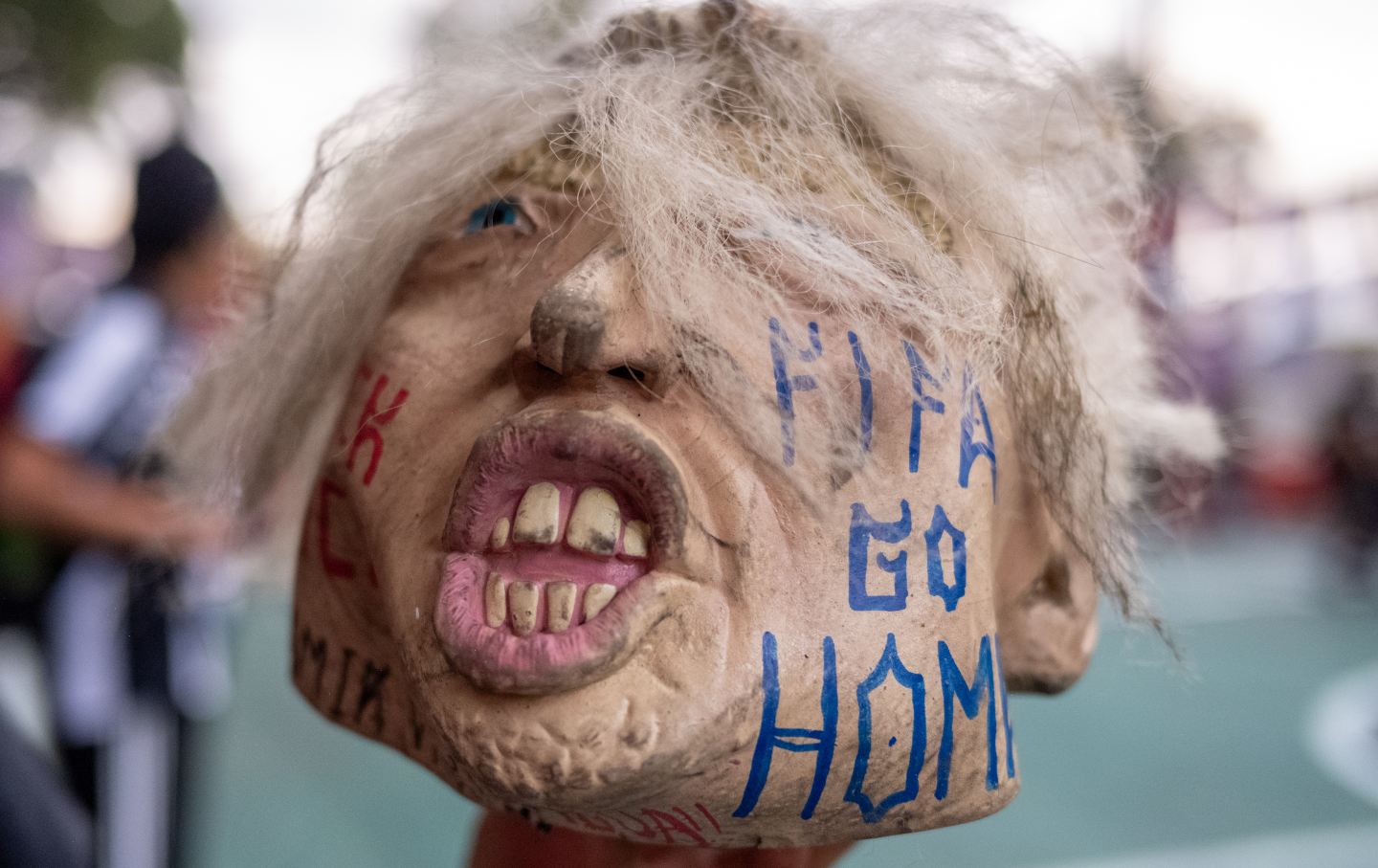
Sovereign wealth, private equity money, and a network of oily alliances between FIFA and the world’s most reprehensible regimes have transformed the sport forever.
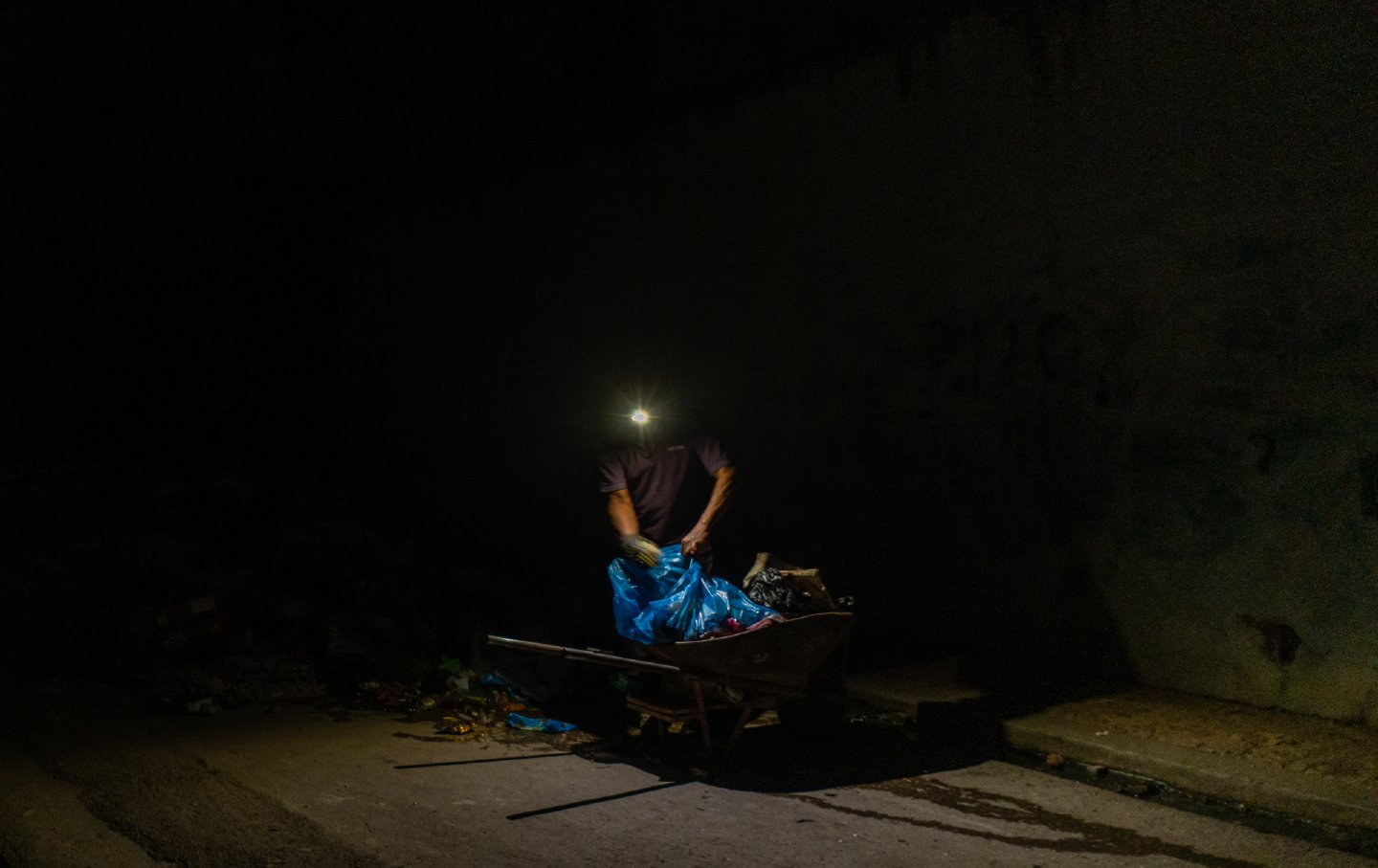
The UN confronts a “perfect storm” of US-sponsored deprivation on the island.
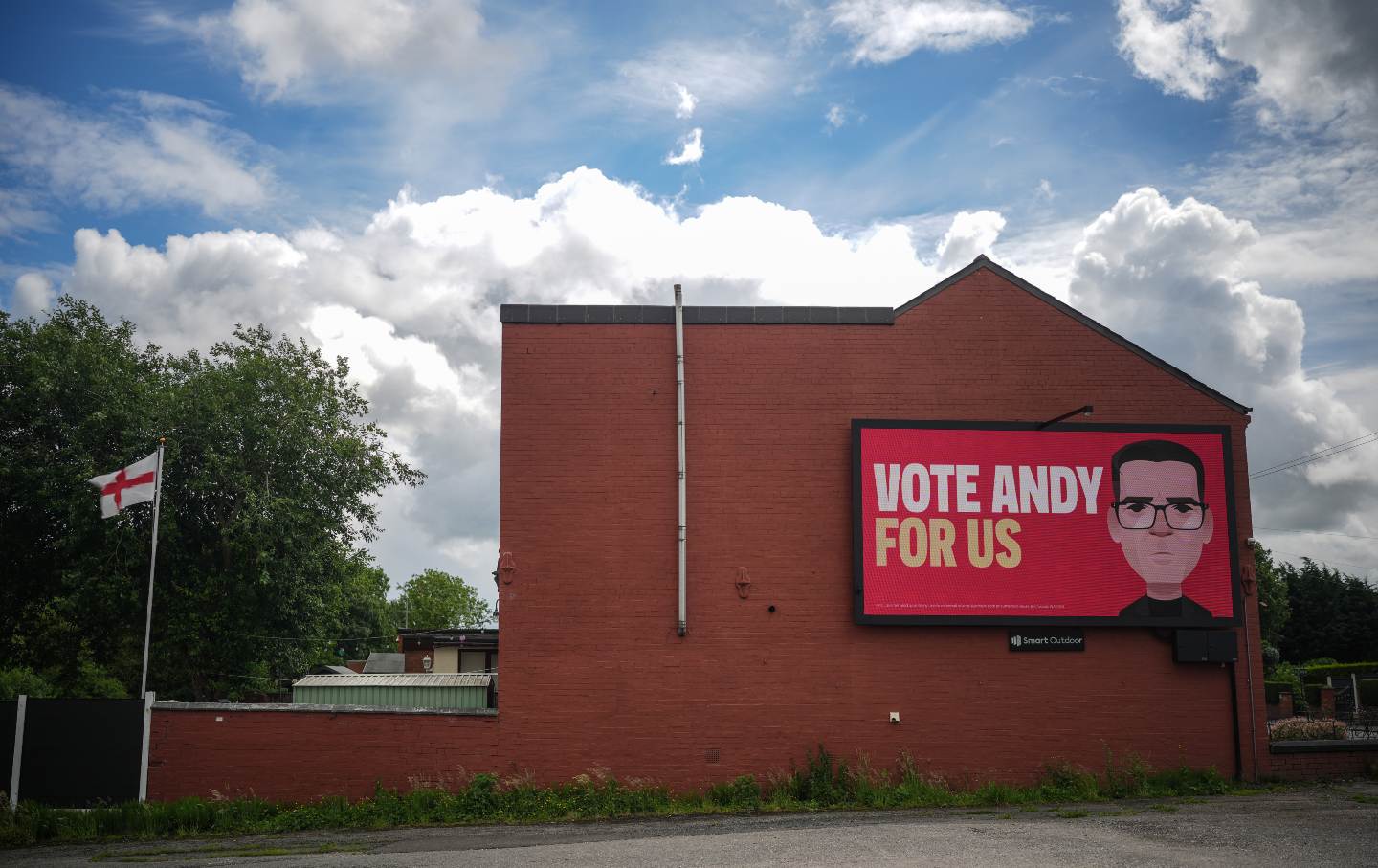
Mayor of Greater Manchester Andy Burnham is expected to challenge Starmer for leadership of the Labour Party.
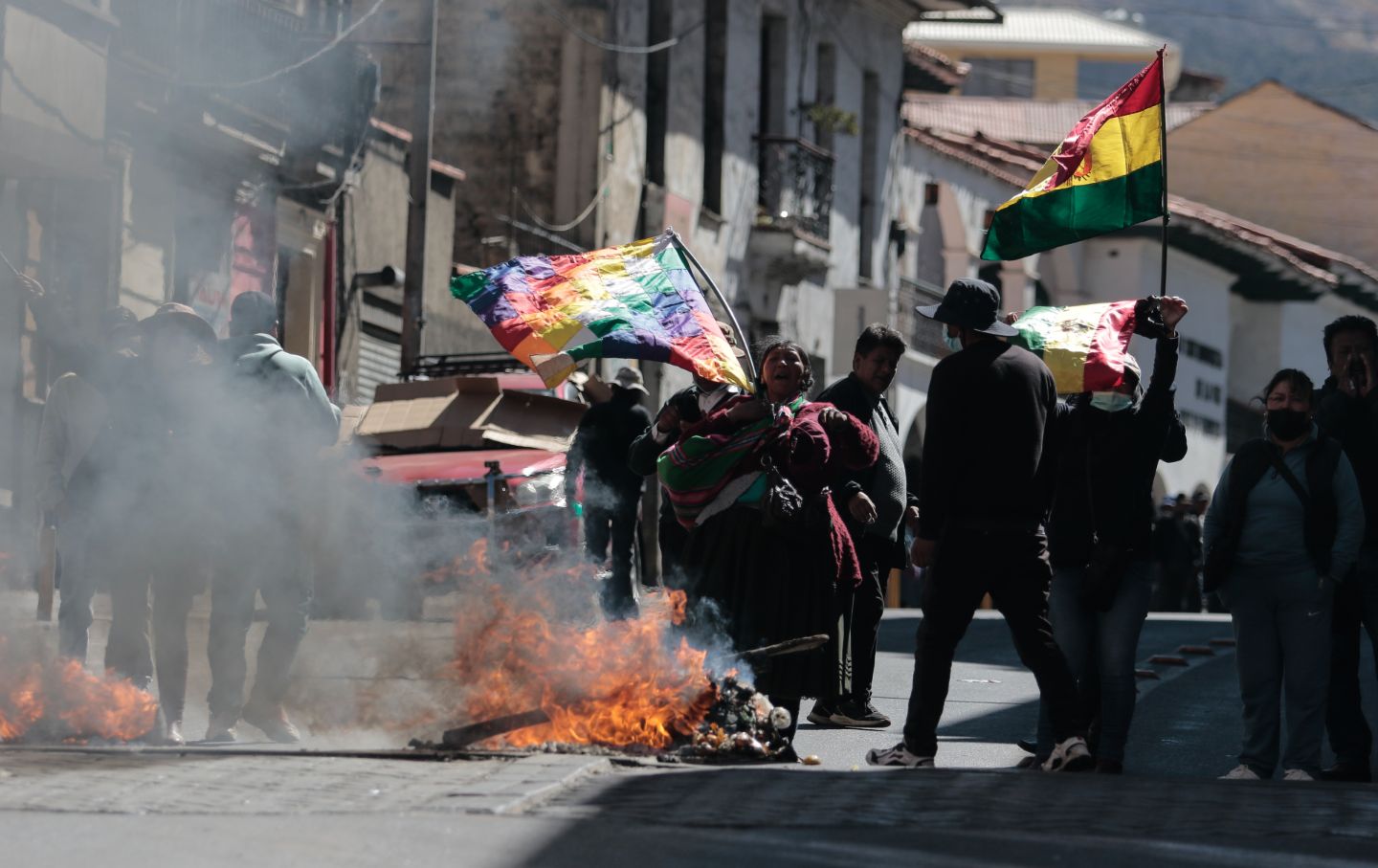
Ordinary people are rising up against neoliberal orthodoxy.
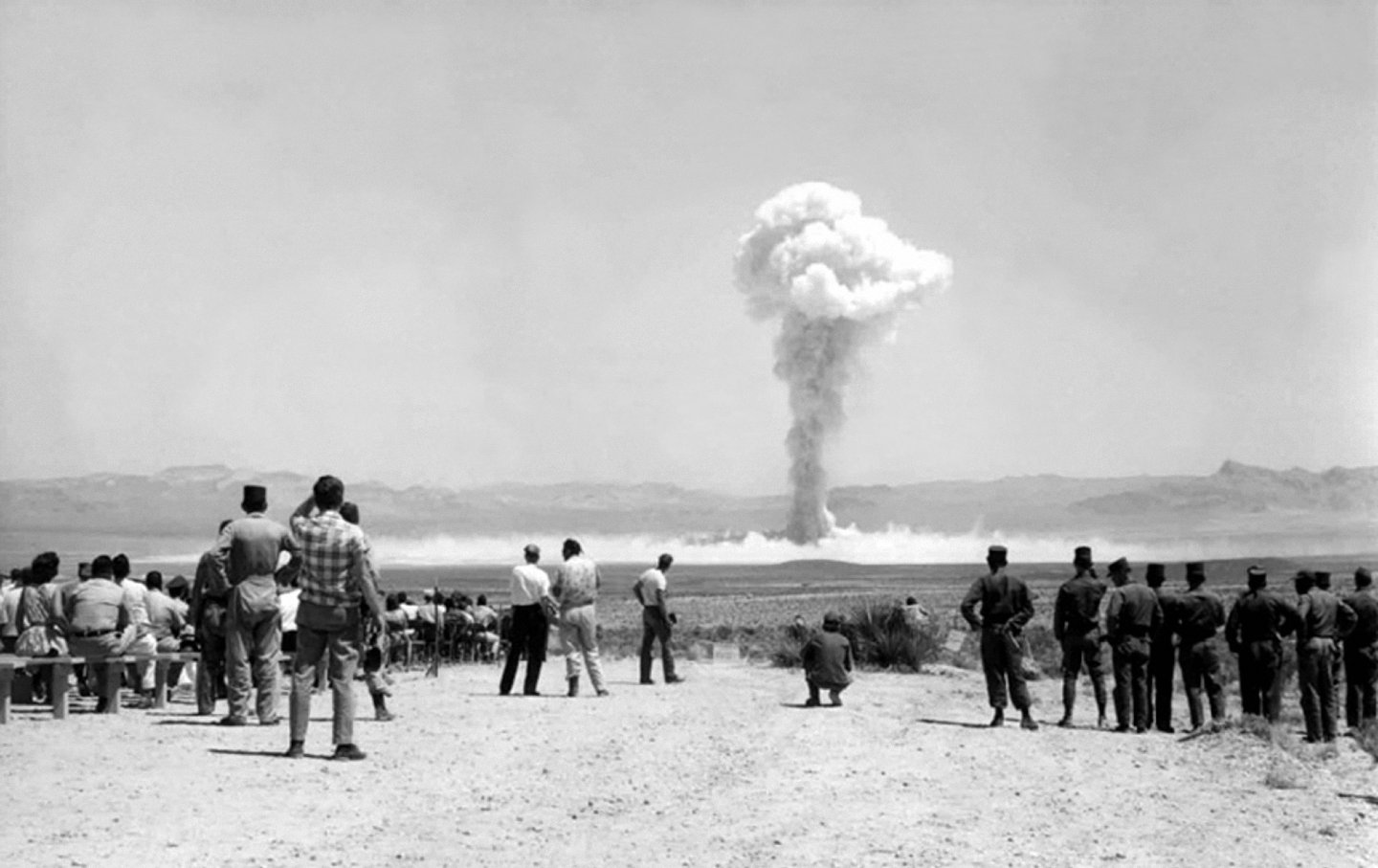
A new documentary issues an urgent warning about our dangerous nuclear delusions.
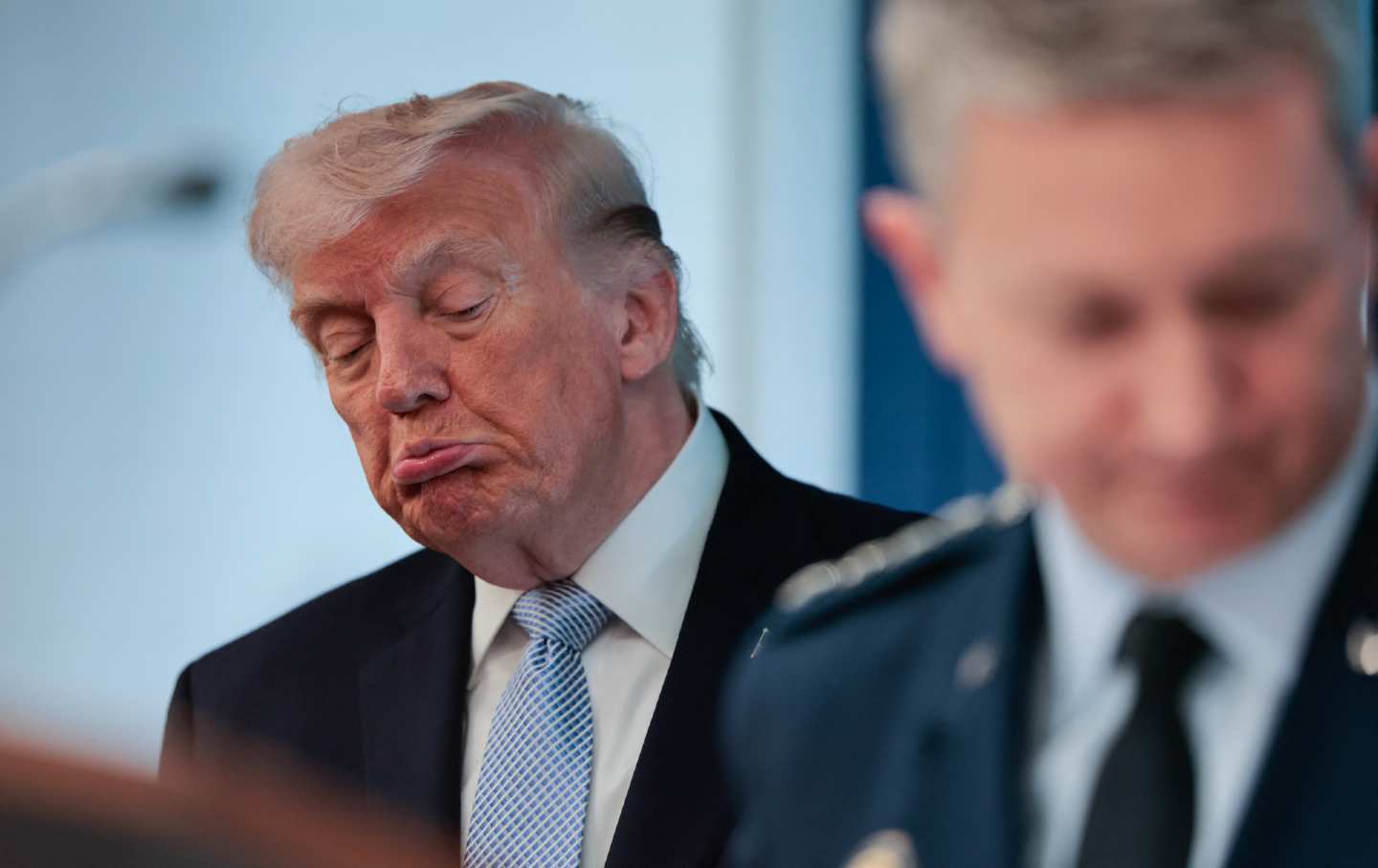
By failing to absorb the lessons of Iran’s strategic victories, the White House is on course to turn the present stalemate into a disastrous quagmire.
